


TSMC forecast major improvements in new technology roadmap

TSMC promises continued silicon advancements into 2026 and beyond
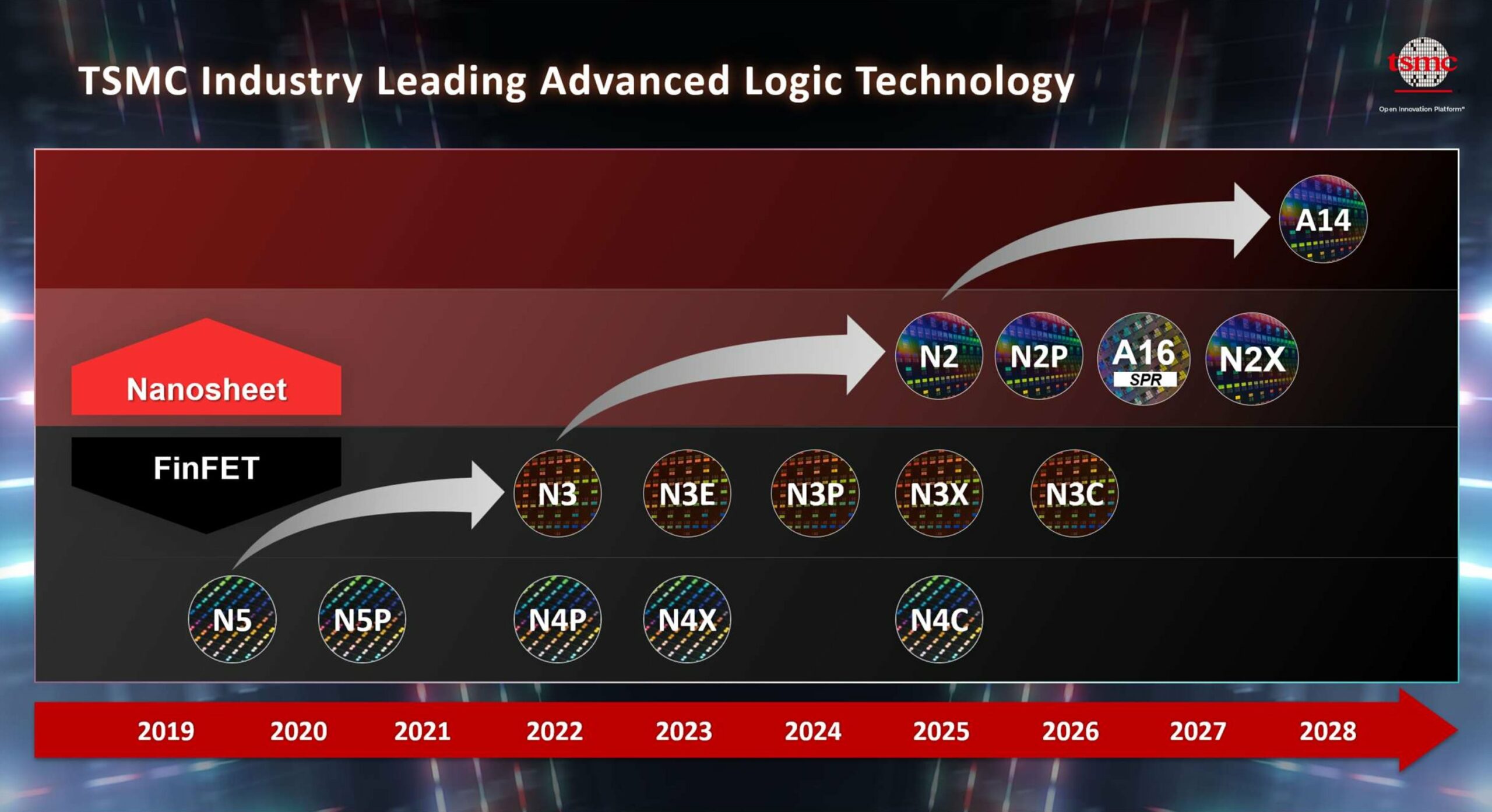
At the Open Innovation Platform Ecosystem Forum, TSMC has unveiled a new advanced logic roadmap. This roadmap highlights the advancements that TSMC plans to make over the coming months and years.
This year, TSMC began producing N2 (2nm) wafers, successfully transitioning from FinFET to Nanosheet transistors. AMD is one of the first companies to tape out 2nm silicon at TSMC, having used it to create Zen 6 CPU CCDs. AMD’s first Zen 6 CPUs are due to be released in 2026.
Moving beyond 2nm, TSMC plans to introduce several N2-family nodes. This includes enhanced versions of N2, which are N2P and N2X. These nodes will deliver enhanced performance and efficiency characteristics. Another N2 family node is called A16 SPR, with SPR standing for “Super Power Rail”. TSMC’s SPR tech is said to be equivalent to Intel’s backside power delivery tech. A16 reportedly (via HardwareLuxx) achieves clock speeds 8-10% higher than N2P at the same voltage, or have 15-20% lower power draw at the same performance levels.
TSMC’s next major node transition will be to its A14 node, which will deliver more density, performance, and efficiency benefits over N2.
(Image from Andreas Schilling)
Continued power and efficiency gains
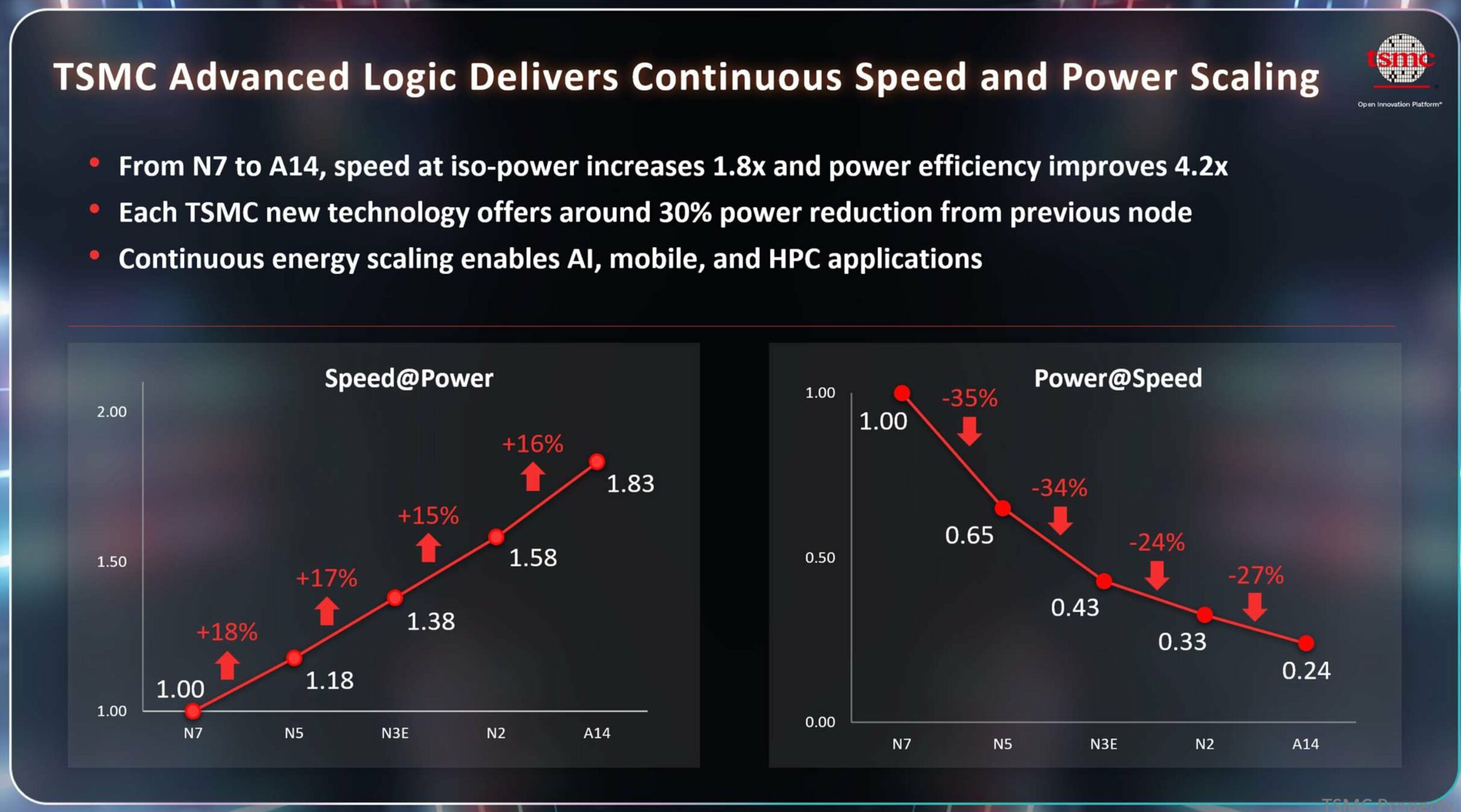
With its upcoming N2 and A14 nodes, TSMC aims to deliver increased power scaling and performance improvements. TSMC claims that its A14 node will deliver 1.8x performance increases at ISO power and 4.2x power efficiency improvements. On average, every node transition delivers a 30% reduction in power over prior nodes. However, the chart below suggests TSMC’s efficiency improvements are slowing.
When it comes to performance scaling, TSMC’s new nodes will continue to improve at a similar pace to before. N2 should deliver 15% more performance than N3E, and A14 should be 16% faster than N2. If nothing else, we can expect TSMC to continue making faster transistors well into the future.
(Image from Andreas Schilling)
The good news for the tech sector is that TSMC isn’t slowing down. Node development is on track, and these new nodes will continue to offer density, performance, and efficiency benefits. That means we can expect faster, more efficient processors in the future.
You can join the discussion on TSMC’s technology roadmap on the OC3D Forums.