


DLSS 5 is coming to RTX 40 series GPUs, but not yet

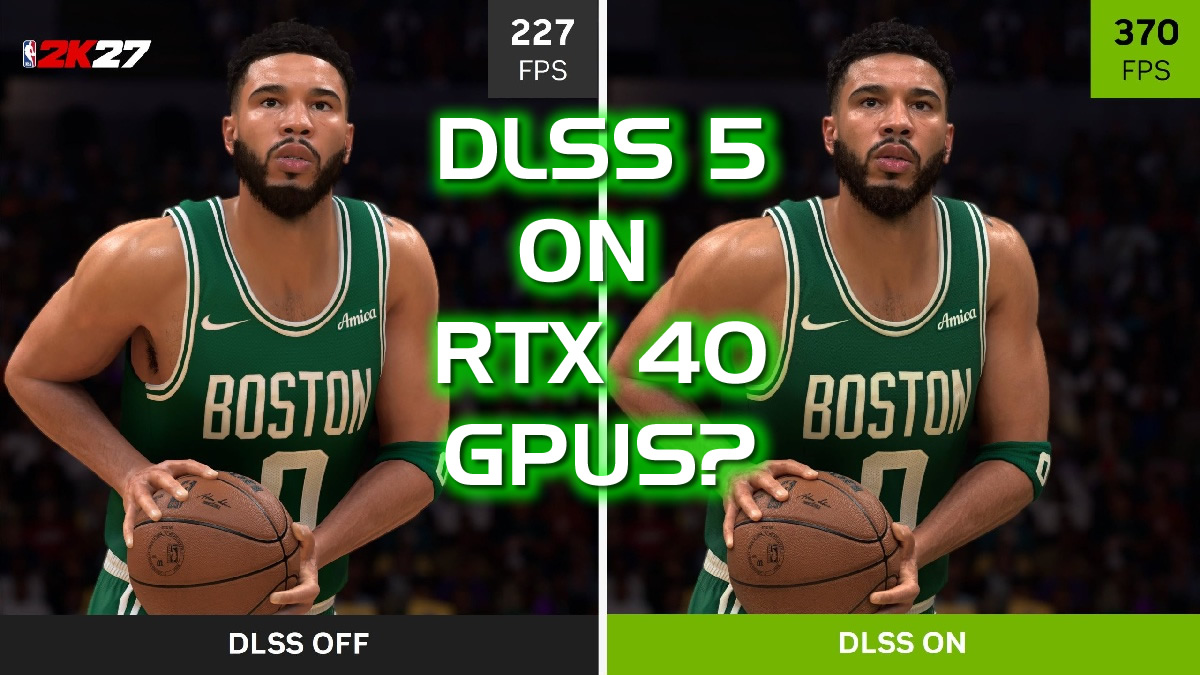
Nvidia confirms DLSS 5 support plans for RTX 40 series GPUs
Nvidia has officially confirmed that DLSS 5 will come to users of its last-generation RTX 40 series GPUs. Initially, Nvidia said DLSS 5 would only be supported on RTX 50 series GPUs, but in a new statement, it confirmed support for the RTX 40 series.
While the exact reason for this shift is unknown, modders have already gotten DLSS 5 working on RTX 40 series GPUs. Furthermore, the performance impact of DLSS 5 on RTX 40 series GPUs isn’t much larger than its impact on RTX 50 series GPUs. This has created a backlash against RTX 50 series exclusivity for the feature.
DLSS 5 is our most computationally demanding model to date. Since we initially announced it in March, we’ve achieved a 5X performance gain and there’s more to come. Our current focus is on optimizing performance for the GeForce RTX 50 Series with model updates expected later this fall. Once RTX 50 Series performance is more fully tuned, we plan to work on expanding official support to the GeForce RTX 40 Series.
– Nvidia
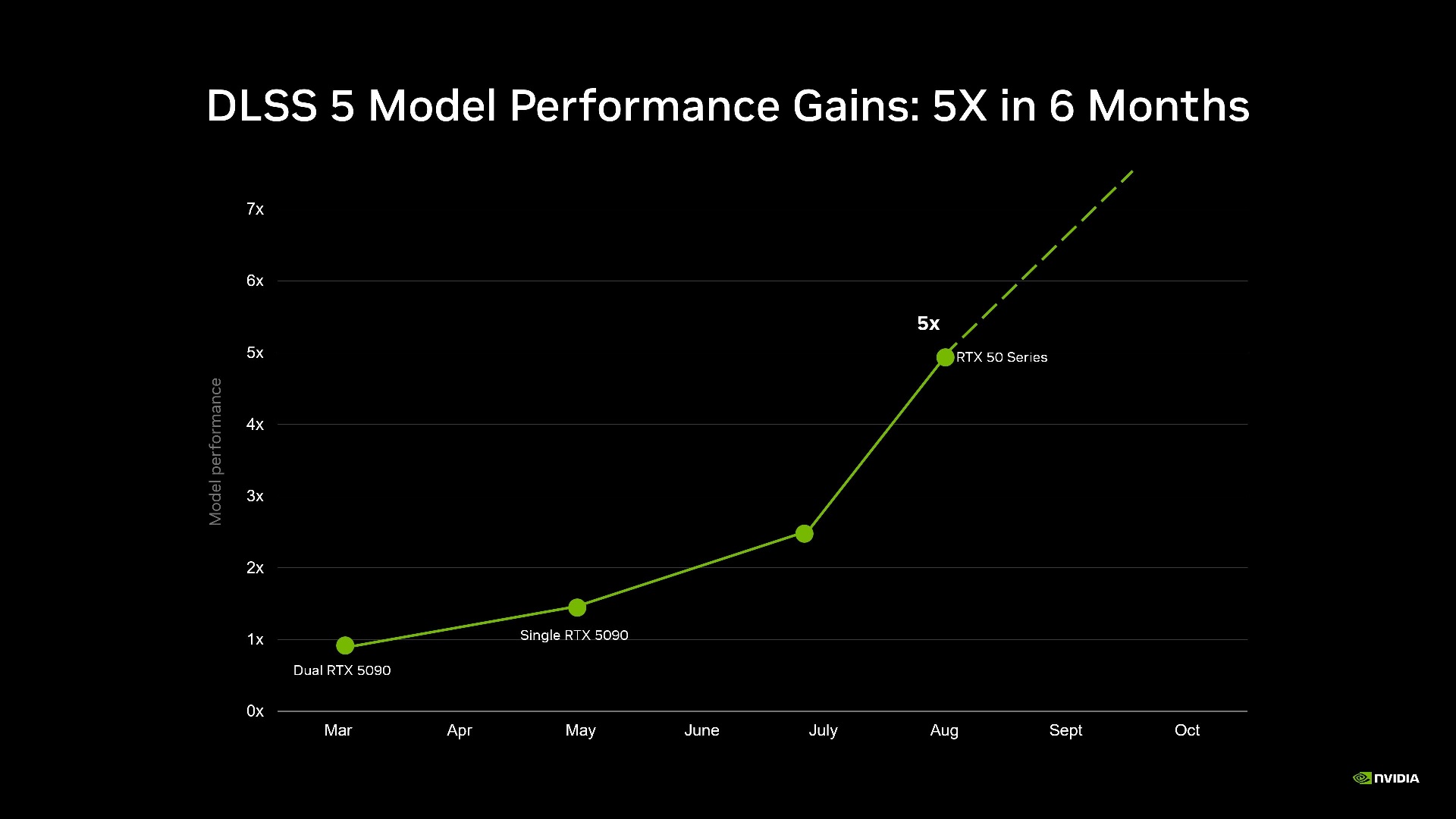
As we wrote about earlier this week, Nvidia plans to lessen the performance impact of DLSS 5 with new optimisations. DLSS currently runs five times faster than it did when it was first unveiled. Based on Nvidia’s chart above, Nvidia expects to boost DLSS 5’s performance to more than 7x faster than its March 2027 version. If Nvidia reaches 7.5x its original DLSS 5 performance, it will run 50% faster than it does today.
40-series GPU support will come after Nvidia releases its more optimised version of DLSS 5 this fall. This could place Nvidia’s wider DLSS 5 release in late 2026 or early 2027.
Nvidia’s FSR 4 moment
When modders got FSR 4 working on pre-RDNA 4 graphics cards, AMD faced a huge backlash. At that time, only RDNA 4-based RX 9000 series GPUs supported AMD’s AI upscaler. Simply put, gamers with older Radeon GPUs wanted to use FSR 4, and they were angered that AMD wouldn’t let them.
AMD eventually brought FSR 4 to its older RX 7000 series (RDNA 3) GPUs with FSR 4.1. Additionally, AMD has promised to add FSR 4 to its RX 6000 series (RDNA 2) GPUs next year. With DLSS 5, Nvidia has faced a similar backlash. When modders can enable DLSS 5 support, there’s no reason why Nvidia can’t make it official.
As it stands, DLSS 5 is incredibly taxing on GPUs. Nvidia must further optimise it, because while DLSS 5 can improve gaming visuals, halving framerates is too much for many gamers to accept. Let’s hope that Nvidia’s next wave of optimisations bears fruit.
Join the discussion on Nvidia’s DLSS 5 tech coming to its 40-series GPUs on the OC3D Forums.