


When Windows 11? Microsoft boosts Windows Server with Native NVMe support

Microsoft ushers in a new era of Windows Server storage performance with Native NVMe support
Microsoft has officially added Native NVMe support to Windows Server 2025, an opt-in feature that can deliver boosted storage performance when using modern NVMe SSD storage solutions. Until now, Microsoft’s storage stack considered all storage devices as SCSI (Small Computer System Interface) devices. This storage protocol was designed for older/slower storage solutions.
With “Native NVMe” support, Windows Server 2025 eliminates the need to convert NVMe commands to SCSI commands. This reduces processing overhead and decreases latency, making NVMe storage devices faster and more responsive. This move comes as part of Microsoft’s plans to modernise its storage stack, delivering performance gains through software/ecosystem updates.
Faster storage, lower CPU utilisation
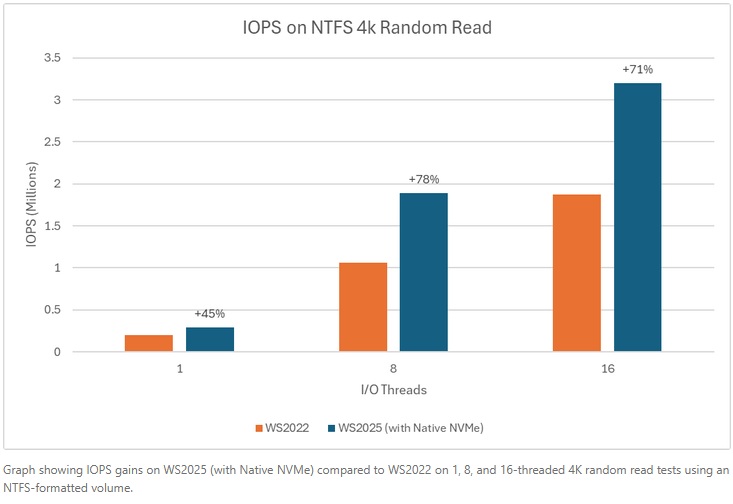
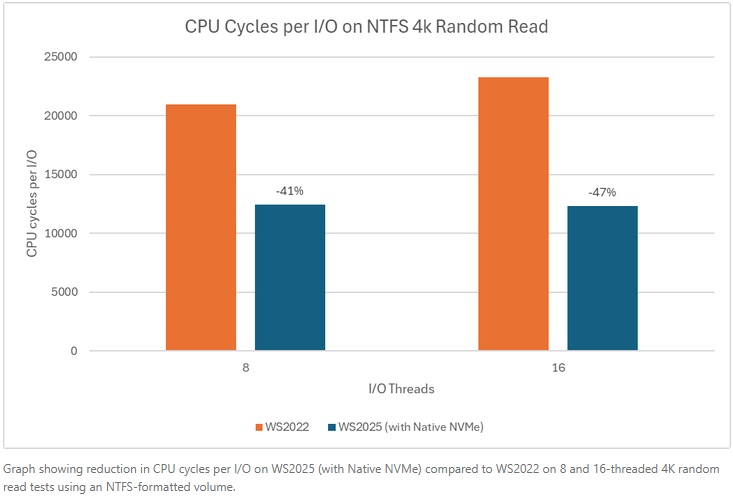
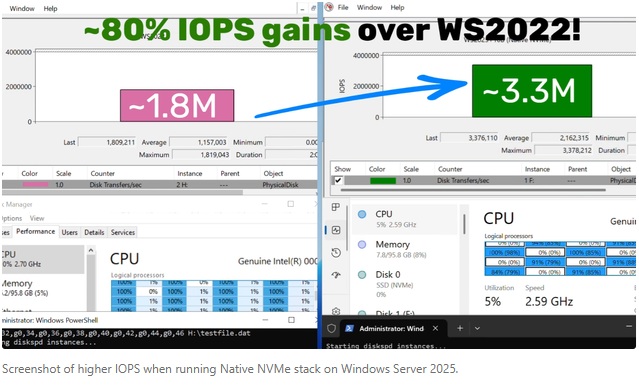
With Native NVMe support, Microsoft has achieved up to 78% IOPS gains and up to 47% CPU cycle reductions. This increases power efficiency and system performance. By eliminating translation layers and legacy constraints, Microsoft has delivered higher levels of system performance with Windows Server 2025.
Major performance gains
With Windows Server 2025, Microsoft’s Native NVMe update can enable faster transaction times in SQL Servers, faster VM boots, and accelerate file servers. Given how long NVMe SSDs have been available, it’s surprising that Microsoft has not made this change sooner. To say the least, this update showcases how far behind Microsoft’s software has fallen behind the capabilities of modern PC hardware.
What about Windows 11?
So what about Windows 11? When will Native NVMe support arrive there? Who knows. Microsoft has confirmed plans to improve Windows 11 performance, at least for gamers. Those plans could include Native NVMe support. After all, lowered CPU utilisation for storage and boosted storage performance would be welcome changes for gamers. Since Windows 11 and Windows Server both share much of the same codebase, it’s only a matter of time before Windows users get access to this feature.
You can join the discussion on Microsoft bringing Native NVMe support to Windows Server 2025 on the OC3D Forums.