

ASUS ROG RYUO IV SLC 360 ARGB CPU Cooler Review

Thermal Testing – Cinebench R24
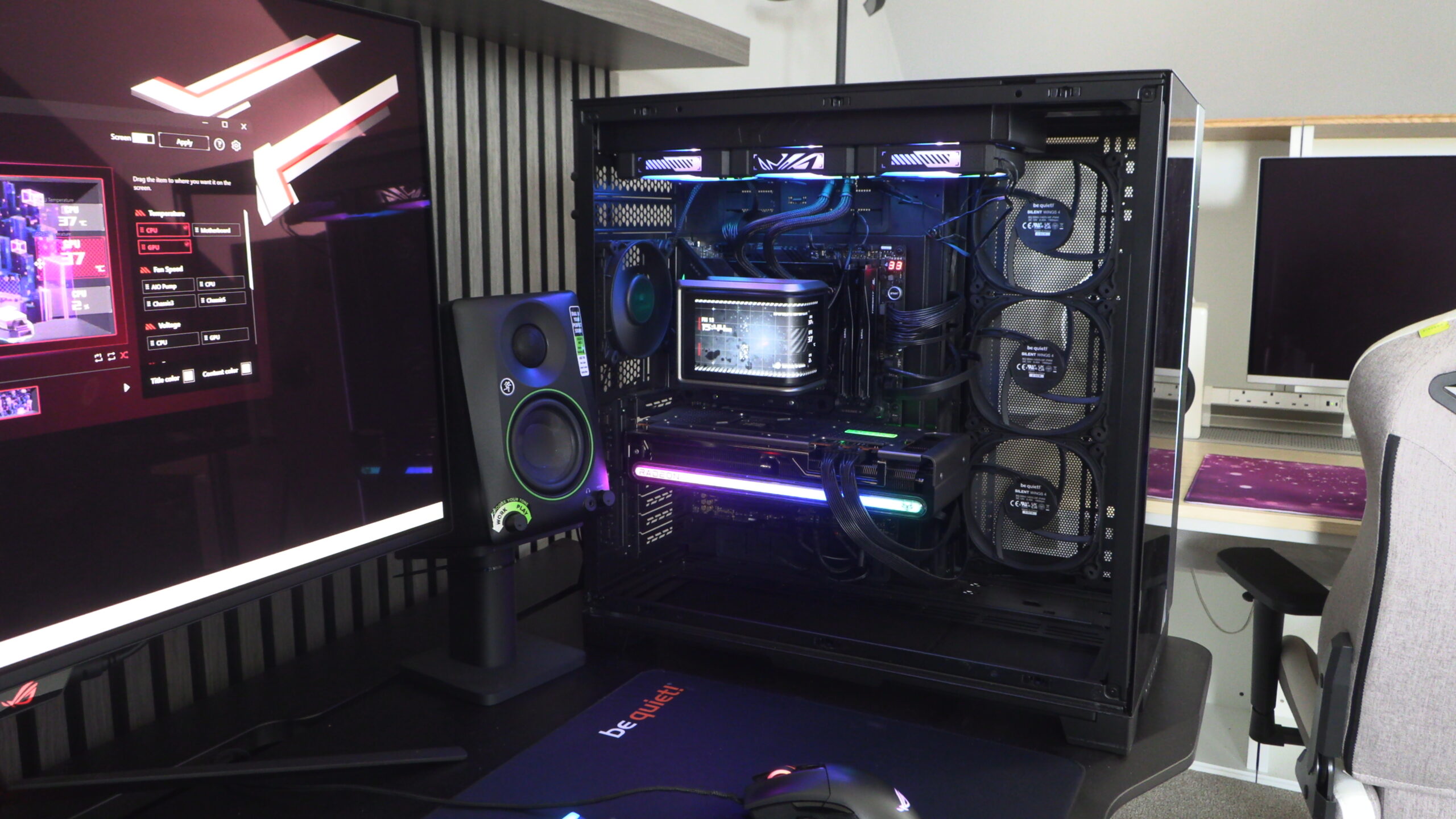
OC3D CPU Cooler Stress Test
We want to push CPU coolers to their limit, and that requires a workload that will place maximum load on our i5-14600K CPU. Why didn’t we choose an i7 or an i9? The simple answer is that we want to test various CPU Cooler options. If we put the hottest CPU we could in our system, only the best of the best CPU coolers would even pass our testing procedures. Since not everyone uses such a power-hungry CPU, we decided to tone the wattage and thermal loads down by using an i5-14600K. Even so, this CPU consumes a lot of power and generates a lot of heat under all-core workloads.
For testing, we have used Cinebench R24. This is an all-core workload that places heavy strain on all available CPU cores. This load pushes CPU thermals higher than any other and does so consistently. We use Cinebench R24 for 30 minutes to see how hot our CPU gets over that time. If CPU temperatures rise to 100 degrees Celsius or over, that CPU cooler has failed our testing. This is part of the reason why there are more coolers on our higher fan RPM cooler charts. Some coolers will pass our thermal testing at higher fan RPMs but fail at lower fan RPMs.
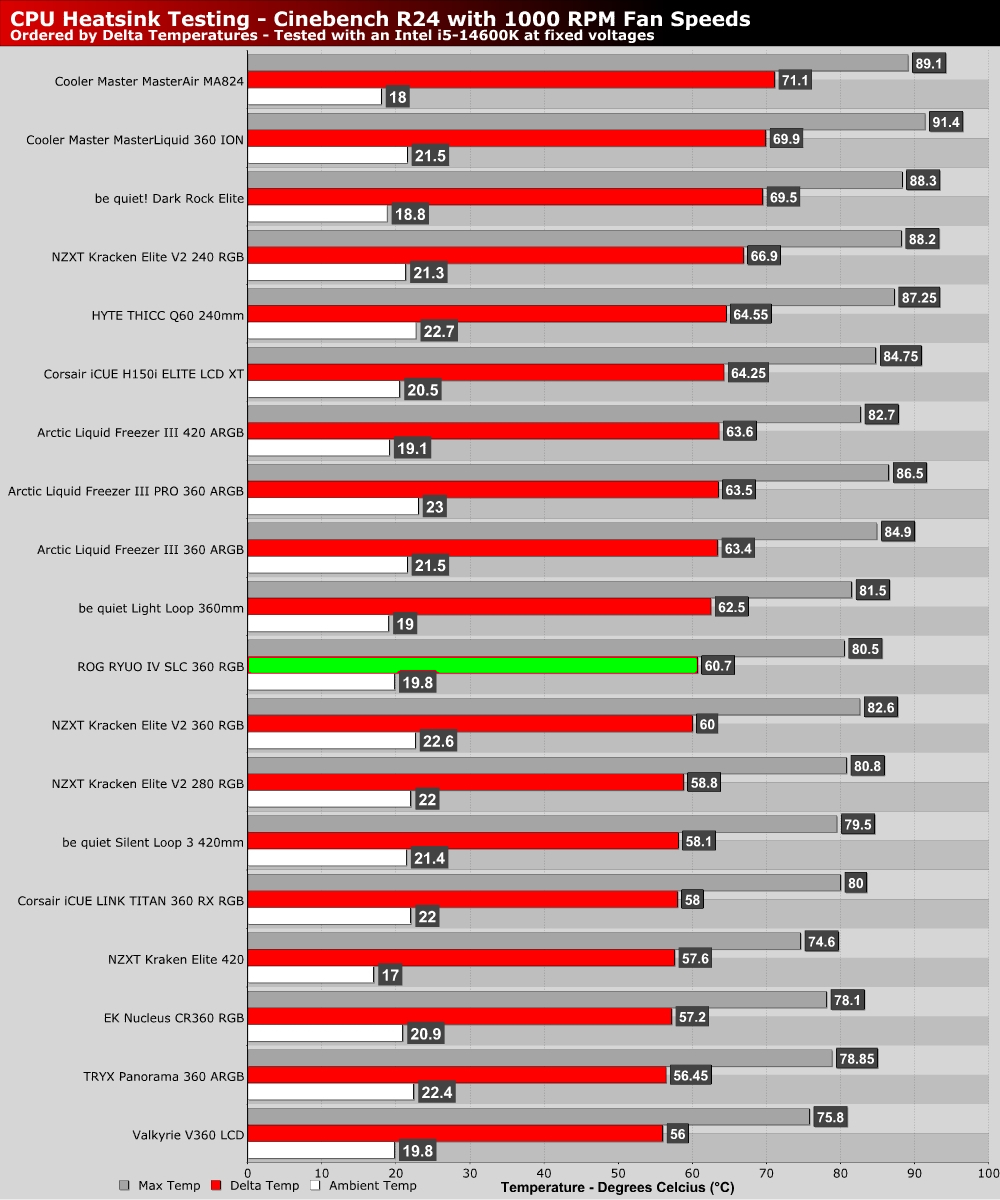
1000 RPM Fan Test
At 1,000 RPM, we see solid results from ASUS’ Ryou IV 360 SLC CPU cooler. It is only a few degrees behind the best coolers that we have tested, which isn’t a bad position to be in.
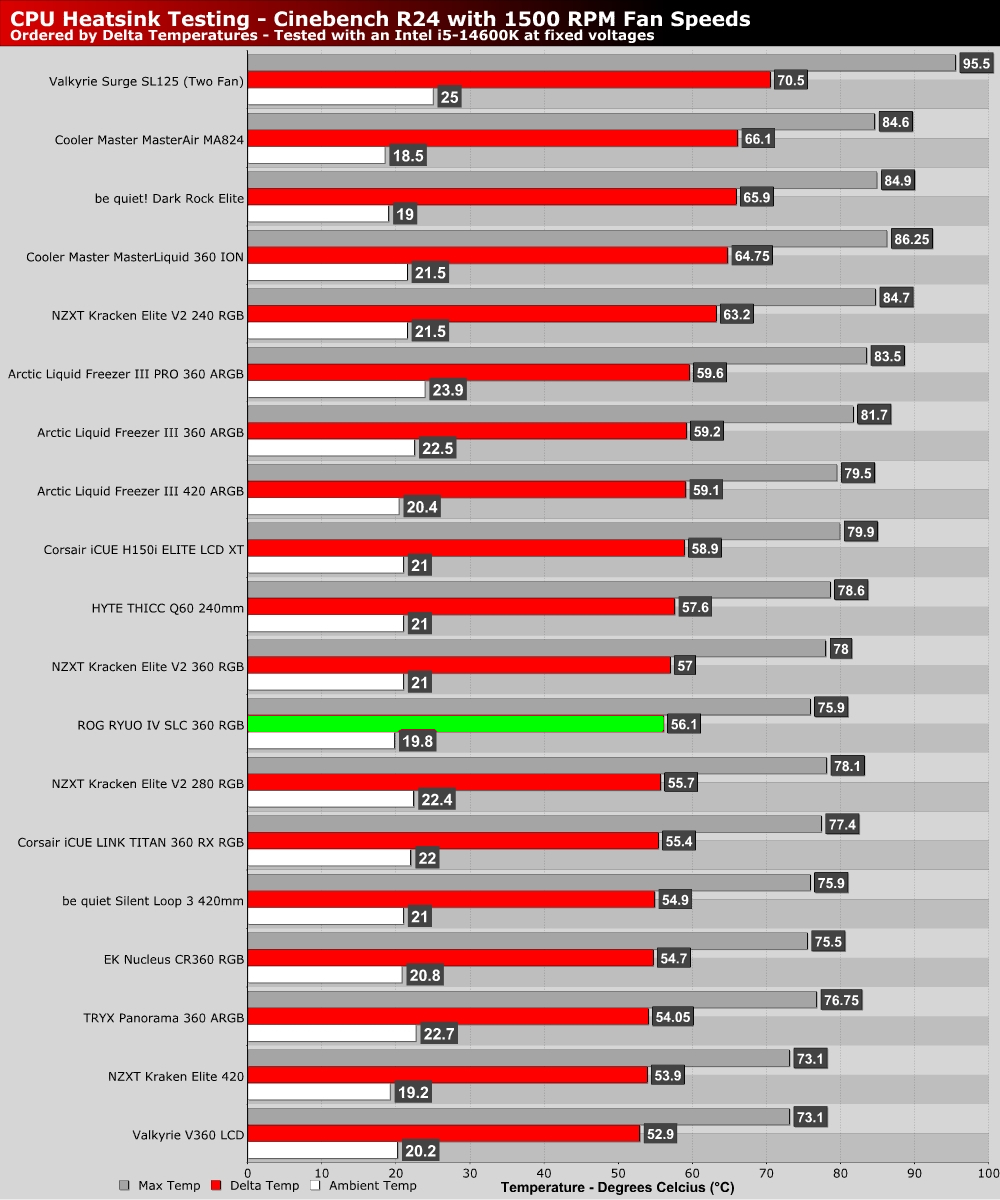
At 1500 RPM, we see CPU thermals drop by 4 degrees. Again, this is a strong result from ASUS.
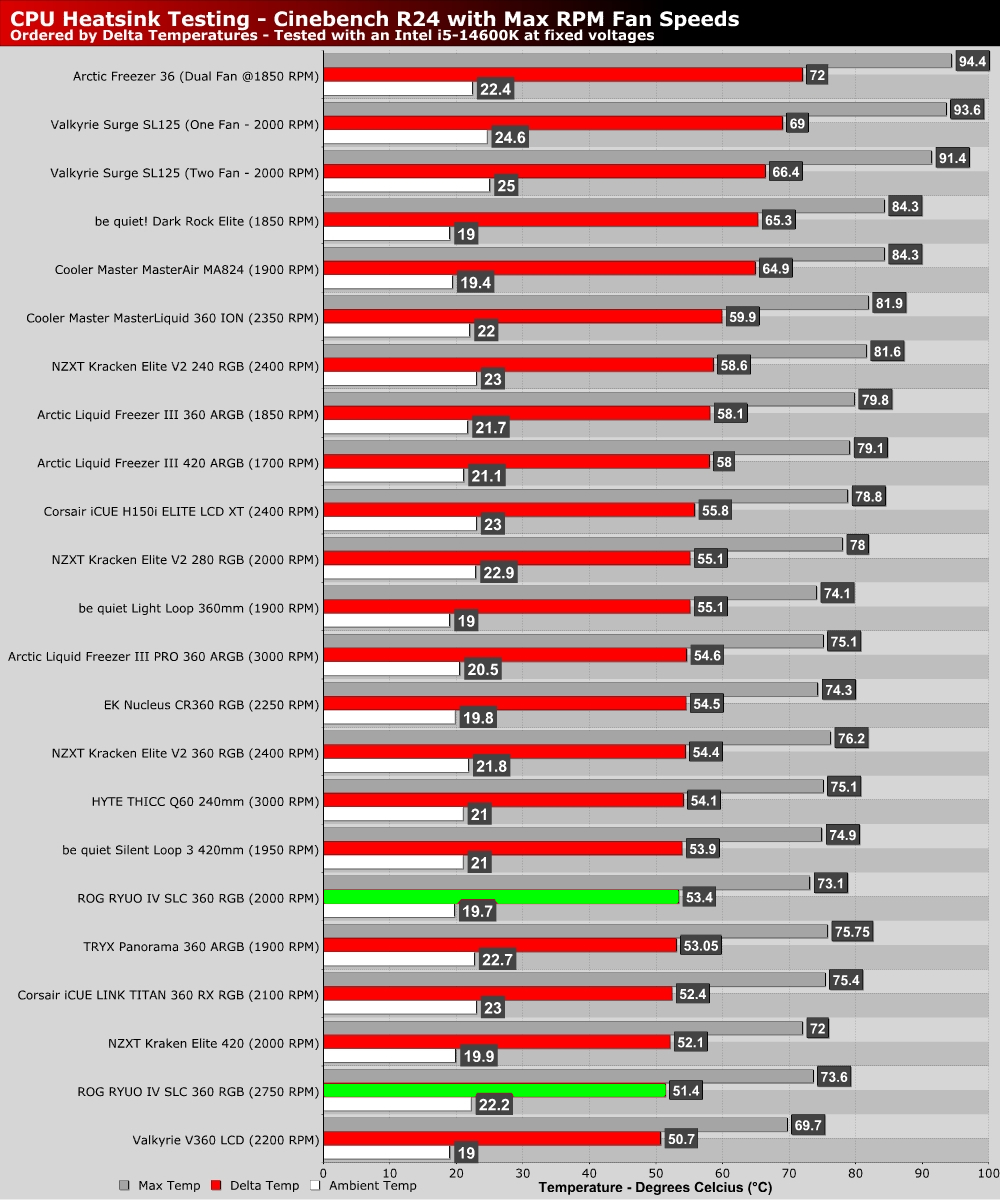
Below we have results for both 2,000 RPM and this cooler’s maximum fan speeds of 2750 RPM. These higher fan speeds yield lower thermals, but at the cost of higher noise levels.