


Silverstone Grandia GD02-MT Case

Testing the Case
We tested the case for it’s cooling ability and for the levels of noise generated by the supplied cooling solution. To measure temperatures, I used Sisoft Sandra Engineer’s Edition, and without any proper noise metering gadgets I had to rely on my ears to gauge noise levels. I recorded the CPU, motherboard and auxillary temperatures, and set fan speeds using the QFan feature within the motherboard’s BIOS. I also noted the noise output at the different speeds too.
The range of fan speeds available with QFan were as follows:
- Silent
- Optimal
- Performance
The components used to build the PC were as follows:
- Asus P57NA-VM Socket 775 – Nvidia nForce 730i Chipset
- Intel Pentium Dual Core E2200 with stock air cooler run at default clock of 2.2GHz
- Geil Ultra DDR2-800 2x1GB at stock settings
- Hitachi SATA II 150Gb HD
- Powercolor ATI HD4850 with stock air cooler, run at stock speeds
- Thermaltake Toughpower 750w Modular PSU
- Windows Vista 64 SP1
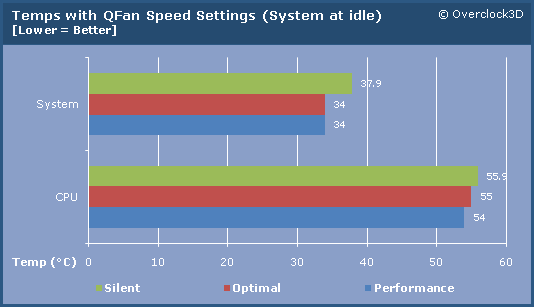
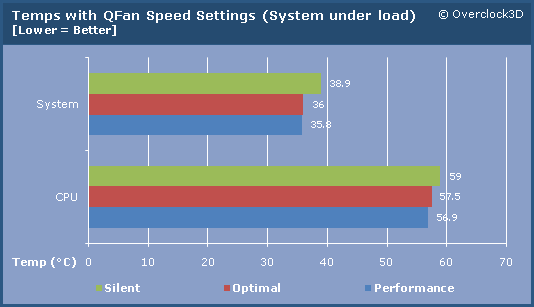
The results were taken from Sisioft Sandra Engineers Edtion. As you can see from the results, the cooling supplied by Silverstone is adequate, but there would be little room for overclocking.
Noise output of the case fans
The noise generated by the two 80mm fans was not as bad as I originally feared. As one of the important neccessities of a HTPC is quiet operation,a noisy HTPC can ruin the experience of watching a movie or the TV. I did have some concerns over Silverstone’s choice of fan size. Larger fans generate less noise and 80mm fans can be quite whiny sometimes.
The noise generated with the fan speed set to silent within the BIOS made the noise generated difficult to distinguish from the hard drive and CPU fan noise, so it would be very acceptable when the PC is in use within the lounge.
With the fan speeds set to optimal, the noise was barely any different from when they were set to silent.
At performance speed setting, the fans were very noticeable. At this level they would definitely prove a distraction when the PC was being used for media purposes.
All in all, the cooling abilty and noise output were acceptable. A HTPC doesn’t have to have very powerful (and hot running) components to be able to function well, and in that respect the case will be more than adequate for cooling and noise levels.
Let’s now move on to our final conclusions, on the next page.
