

Assassin’s Creed Black Flag Resynced PC Performance Review

Ray Tracing – Is it worth it?

Ray Tracing – Is it worth it?
Assassin’s Creed Shadows is intended to be played with ray tracing on PC. That said, the option can be turned off if gamers want a boost in framerate. Overall, Ubisoft’s implementation of ray tracing is very performant, so don’t expect huge framerate gains when turning ray tracing off.
Like Assassin’s Creed Shadows, Black Flag Resynced’s ray tracing enables ray-traced global illumination. This more accurately shades scenes, making shadowed areas suitably dark while adding bounce lighting to further increase lighting accuracy. While this is far from the path-traced lighting options that some other games offer, Black Flag Resynced’s ray tracing delivers a suitable lighting boost.
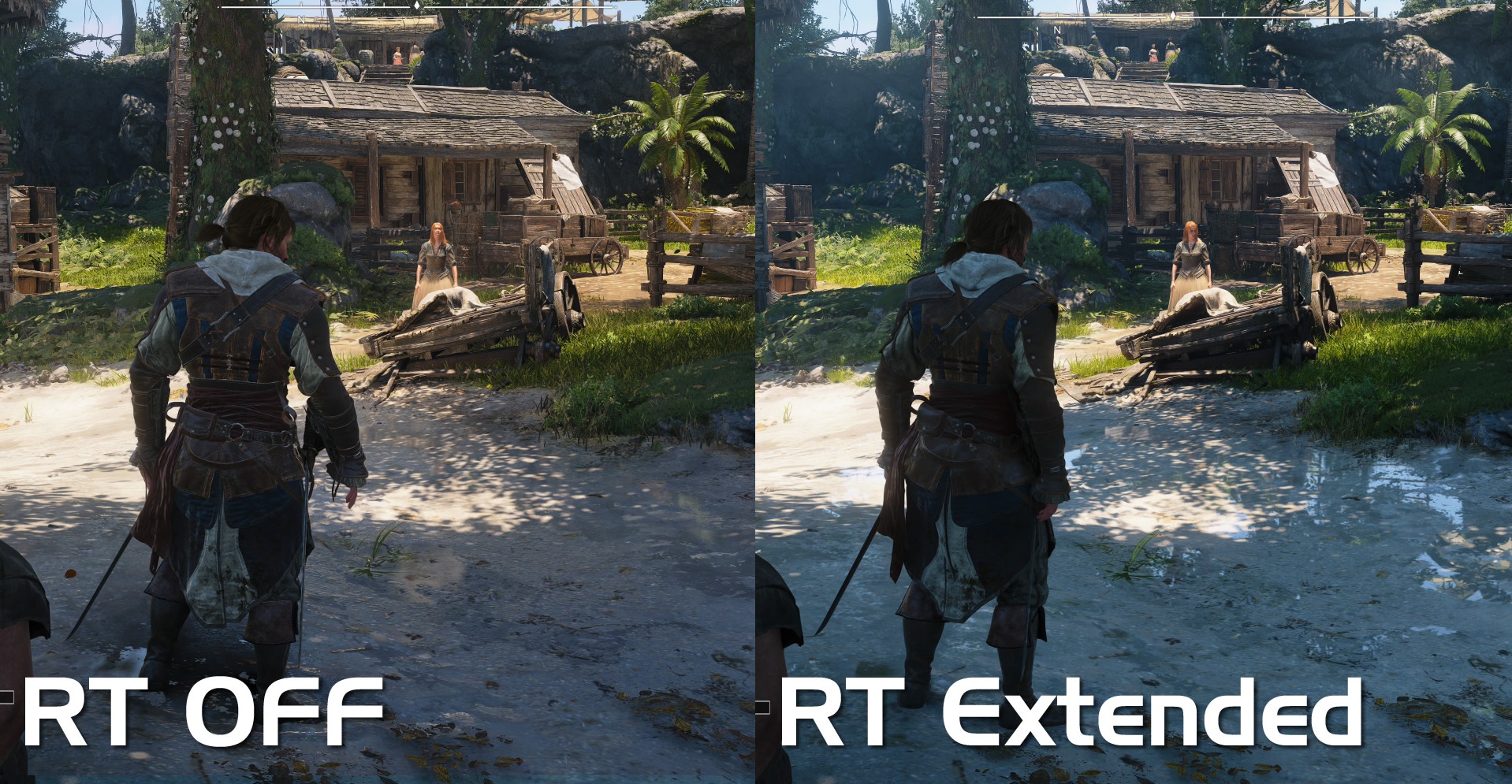
With ray tracing in “standard” mode, ray-traced reflections are disabled. In “Extended” mode, ray-traced reflections are enabled, adding accurate water reflections and diffuse reflections on many surfaces. This does away with artefacts from screen space reflections, which are very noticeable in a game with a large number of sailboats that move across reflective water surfaces. If you have the performance to spare, this is an option that is worth enabling.
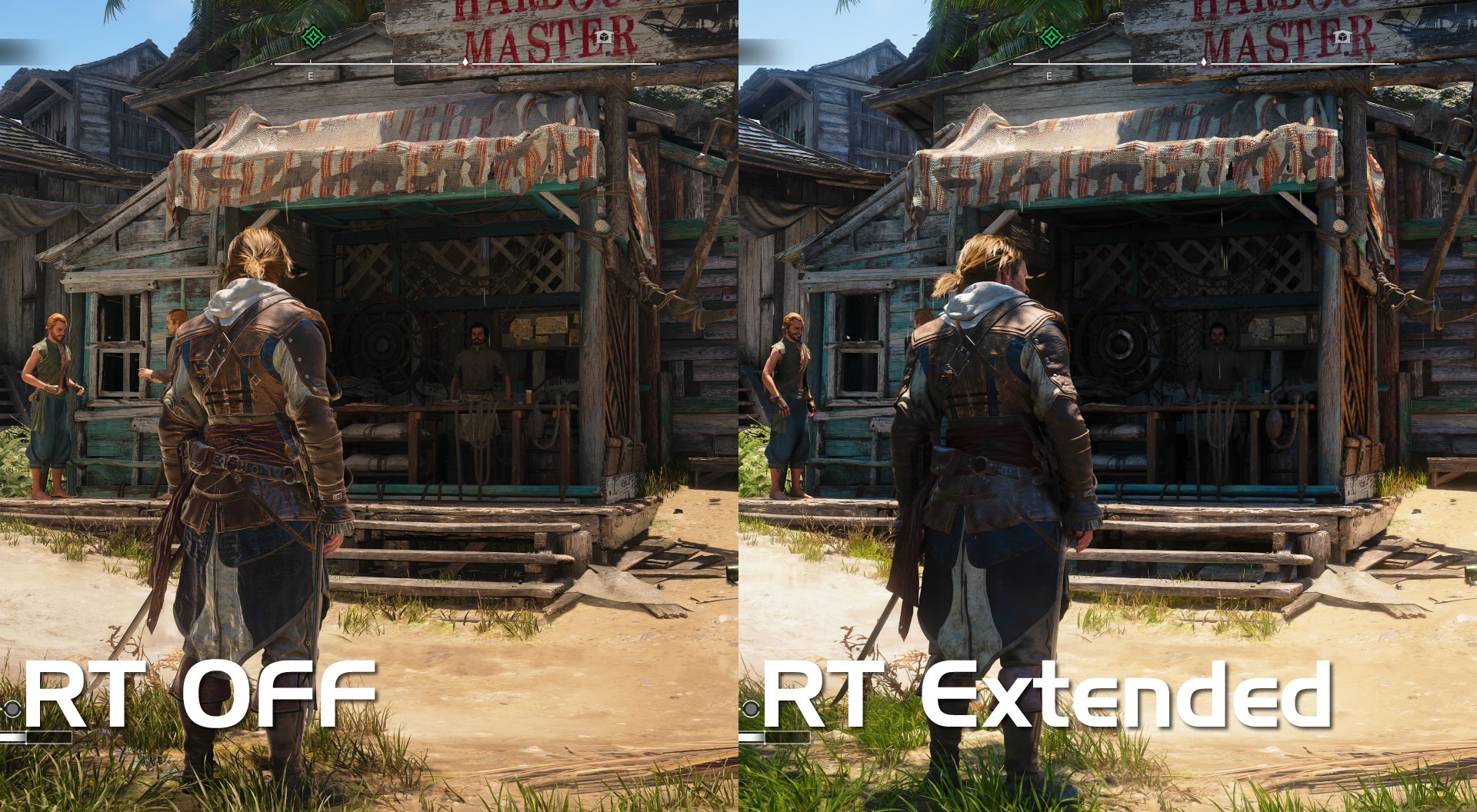
While ray tracing has a notable impact, if you want the fastest frame rates, turning ray tracing off can still provide gamers with a solid experience. Yes, reflections and lighting are worse (especially the lighting in indoor scenes), but the game looks fine in most instances. That said, the performance gains of disabling ray tracing may be smaller than you’d expect.
Ray Tracing performance impact
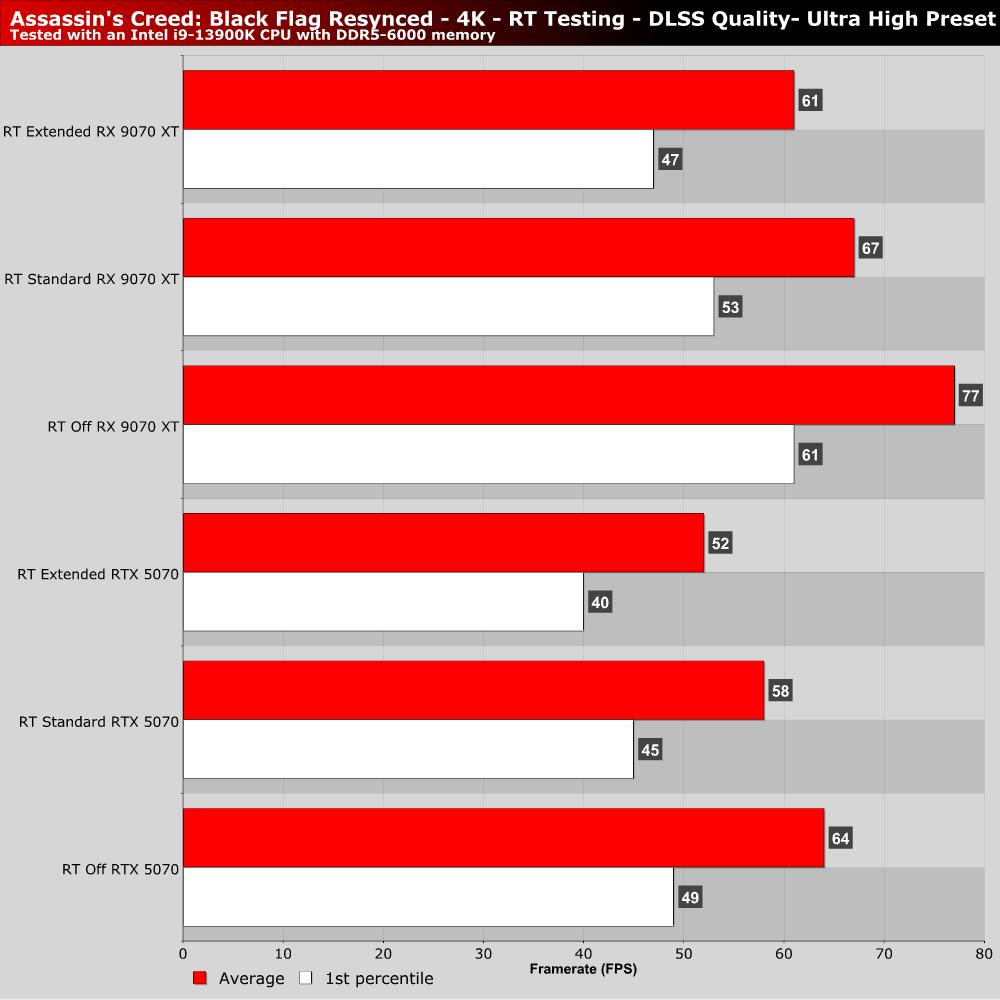
Moving from Ray Tracing Extended to Ray Tracing Off results in a 16.6% and 23% performance boost on our Radeon RX 9070 XT Pulse and RTX 5070 Founders Edition, respectively. While these are notable gains, they are small compared to many other PC games. Ubisoft’s ray tracing implementation is very performant, and significant gains can be achieved by adjusting other settings.