


Hi-Fi Rush PC Performance Review

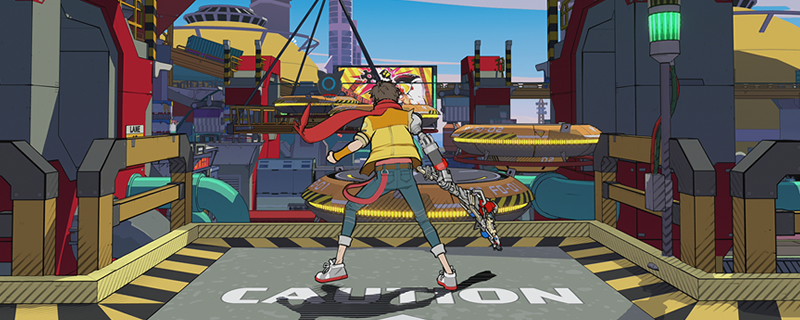
Conclusion – A solid PC version of a great rhythm-based action game
Hi-Fi Rush is a game that is hard to categorise, while it is published by Bethesda and Microsoft, it is not a AAA game with an insane development cost, a high asking price and gameplay that does it best to follow the latest trends. hi-Fi Rush is not a trend follower, it is a trend setter.
Gameplay-wise, Hi-Fi Rush’s combat system is reminiscent of Devil May Cry, with its score charts encouraging players to complete combos, end fights quickly, and make full use of the game’s combat mechanics. With the addition of the game’s rhythm mechanics, Hi-Fi Rush’s combat is something that feels fresh, and outside of combat its platforming sequences are also satisfying to play through. In my mind, this is Ratchet and Clank meets Devil May Cry with a beat thrown in for good measure. It’s fresh, unique, and plays incredibly well, factors that allow the game to shine more than many other recent PC releases (cough, Forspoken, cough).
So what about the game’s PC version? Simply put, this game runs incredibly well on PC, and while the game lacks many graphics settings, most PC gamers will have not trouble playing this game assuming they have a suitable GPU for their resolution. Hi-Fi Rush is a game that is designed to be played at 60 FPS framerates, or higher for those of us who are blessed with high-end systems and high refresh rate monitors. Cutscenes are capped at 60 FPS, something that should be a non-issue for most gamers, and upscaling methods like DLSS, FSR 1.0, XeSS, and TSR (Unreal Engine 4 Temporal Upscaling) are available for those who need it. That said, most gamers should be able to play Hi-Fi Rush at their screen’s native resolution without many problems, assuming they have suitable GPU (Let’s face it, who pairs a GTX 1060 with a 4K monitor?).

If you are still rocking a GPU like AMD’s RX 480 or Nvidia’s GTX 1060, you will be glad to know that Hi-Fi Rush will give you a solid 60+ FPS gameplay experience, and that’s probably understating things. For the GTX 1060, our benchmark scene had framerates move from 90 FPS to 150 FPS, which is great news if you have a Variable Refresh Rate Monitor that extends from 60-144Hz.
For those with a high-end system with an RTX 3080 or RX 6800 XT, 4K 120Hz+ gameplay is something that you can target, with 4K 60 FPS being achievable with an RX 5700 XT or an Nvidia equivalent. In general, Hi-Fi Rush appears to run much better on Nvidia graphics cards, with Nvidia’s GPUs typically outperforming their Radeon counterparts by a significant margin.
If you plan on playing Hi-Fi Rush using an Nvidia graphics card, I can recommend turning on Nvidia Reflex support. This option is towards the bottom of Hi-Fi Rush’s options menu. This feature decreases input latency on Nvidia hardware, making it much easier for players to time their attacks well and keep their attacks on the game’s beat. While Reflex is a feature that is mostly useful for competitive online games, it is a great addition to Hi-Fi Rush.
To summarise, Hi-Fi Rush is a solid PC game that should run well on most modern systems. While it doesn’t have many scaling options, support for a large number of upscaling solutions should allow PC gamers to target high refresh rate gameplay on most systems. This game is a must try if you subscribe to PC Game Pass, and at £26.99, this game is very affordable. That said, this game’s campaign is on the short side.
You can join the discussion on Hi-Fi Rush’s PC version on the OC3D Forums.
