


China sidesteps US ban with EUV chipmaking breakthrough

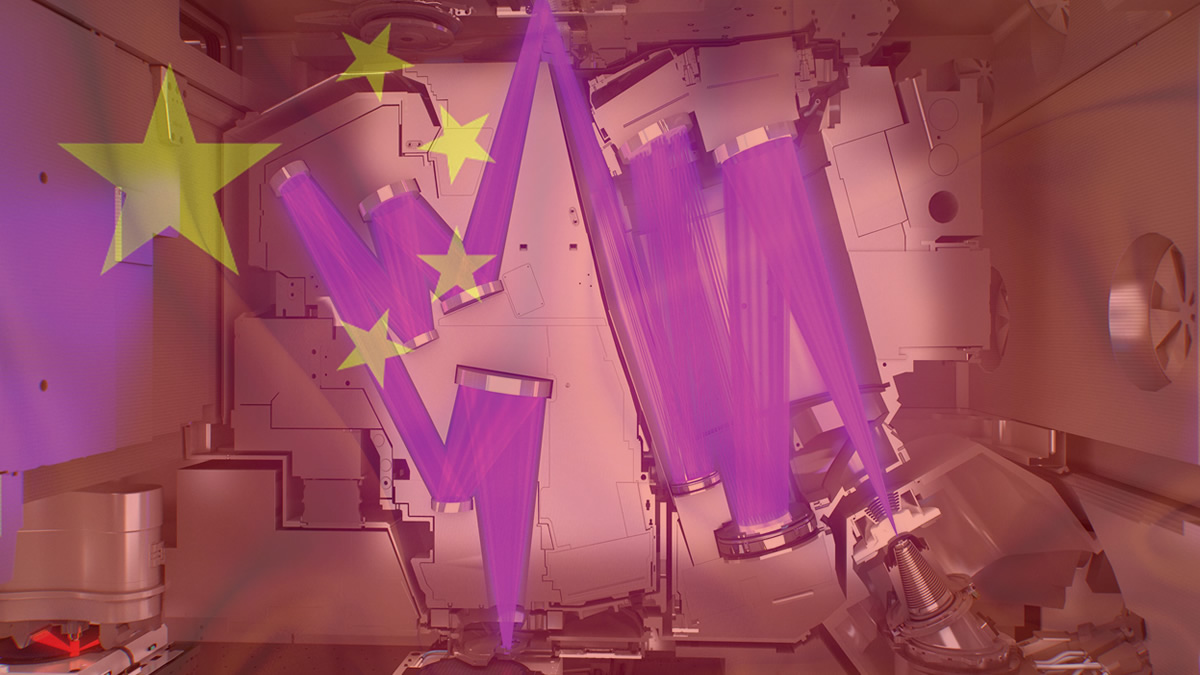
Chinese scientists build a working EUV prototype, striking a major blow against America’s semiconductor leadership
The US has placed heavy restrictions on tech exports to China, hoping to slow down the nation’s progress and limit the growth of its tech sector. Specifically, the US wants to prevent China from making cutting-edge semiconductors, keeping its chips behind those built by rival nations. At the center of this ban is EUV lithography machines, and according to Reuters, China has just built one.
Researchers at Shenzhen have reportedly built an EUV (Extreme Ultraviolet) lithography machine. The machine was reportedly completed in early 2025 and China wants to produce working chips with the machine by 2028. So far, the machine has not made working silicon. Reuters reports that producing working chips by 2030 seems more likely.
Why EUV matters
Today’s cutting-edge CPUs and GPUs all use cutting-edge lithography technology. In simple terms, the best chips require the best silicon. The best silicon requires small, efficient transistors that are readily manufacturable. The latest lithography nodes for Intel, Samsung, and TSMC all use EUV technology. EUV light has a shorter wavelength than DUV light used by older machines. This shorter wavelength allows companies to create smaller, more performant transistors.
Successfully developing an EUV machine is a significant step forward for China. Passing this hurdle creates a pathway towards cutting-edge semiconductors using Chinese tech. This reduces China’s reliance on Western technologies and could allow China to catch up with Western chipmakers. That said, Western chipmakers are already moving on from standard EUV chipmaking technologies.
(Intel getting a High NA EUV machine was a big deal)
China has built an EUV machine, but semiconductor manufacturers are already moving beyond standard EUV tech
TSMC started using EUV technology with its N7+ lithography node in 2019. Intel began to use it with its Intel 4 node in 2023. In 2023, ASML, the world’s leading producer of EUV machines, unveiled its High NA EUV machines. These next-generation machines push beyond standard EUV with High Numerical Aperture (High NA) technology. This week, Intel installed an ASML TWINSCAN EXE:5200B High-NA EUV machine in one of its facilities, paving the way towards its 14A lithography node.
Even if China perfects its EUV lithography machine and can produce more of them, it remains a step behind Western chipmakers. Even so, China has passed a major technological hurdle, a hurdle that America didn’t want China to cross.
China wants to be capable of building advanced chips entirely within China. China seeks to be free of Western technology, and developing an EUV machine is a major step toward that goal.
You can join the discussion on China’s EUV machine prototype on the OC3D Forums.