


PlayStation 6 Handheld Performance Detailed – Better than Xbox Series S

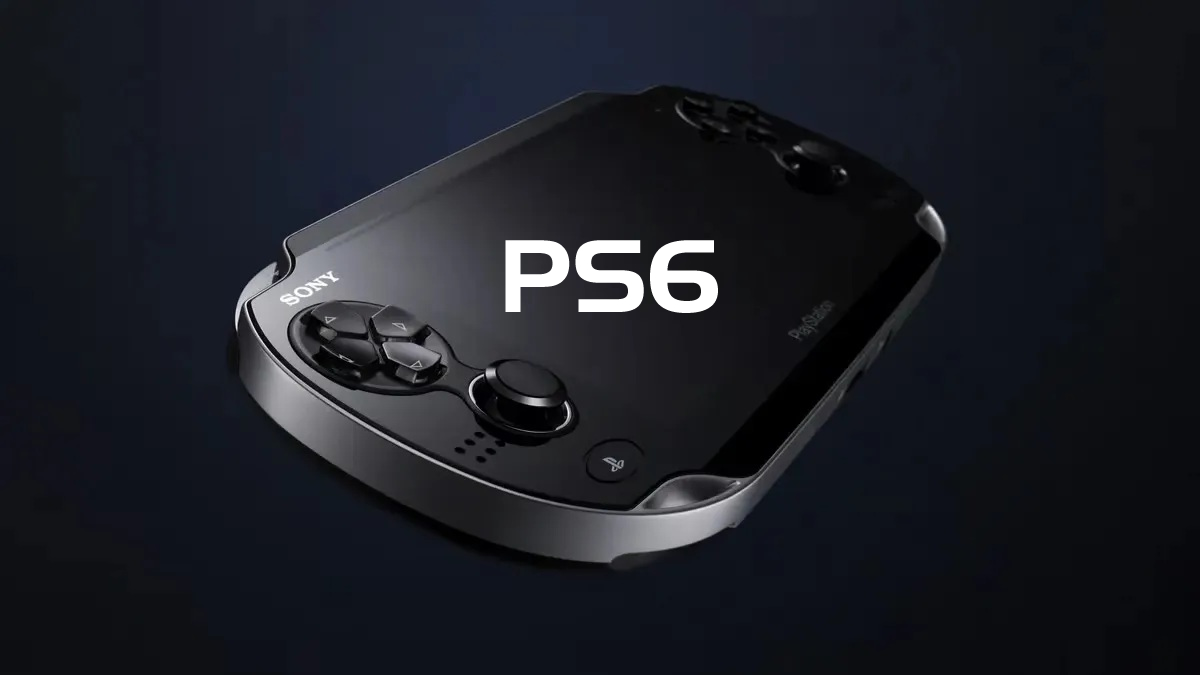
Sony hopes to deliver a better-than-Xbox Series S experience on its next-gen handheld with next-gen upscaling
According to the leaker KeplerL2, Sony’s next-generation PlayStation 6 Handheld should feature a GPU that surpasses the Xbox Series S and Nintendo Switch 2. In fact, the leaker thinks that the system’s GPU will be “a bit ahead of XSS in Raster”, but “Massively ahead” in ray tracing/path tracing workloads.
Sony’s next-generation consoles will feature AMD’s next-generation RDNA 5 graphics architecture. With this new architecture, we will see a major boost in both AI and ray tracing performance. With Project Amethyst, Sony and AMD have already unveiled several architectural features. This includes Neural Arrays, Radiance Cores, and Universal Compression (see more details here), all of which aim to deliver higher performance and greater power efficiency.
GPU is a bit ahead of XSS in raster (and ofc massively ahead in RT/PT)
– KeplerL2, Leaker
PlayStation 6 Handheld – Leaked Specifications
- 4x Zen 6c + 2x Zen 6 LP CPU Cores
- 16x RDNA 5 GPU Compute Units (CUs)
- 192-bit memory bus
- LPDDR5X memory
- 135mm² TSMC 3nm Silicon
While Sony’s planned handheld will be much less powerful than the company’s full PlayStation 6 console (leaked specifications here), both contain the same underlying CPU and GPU architectures.
With RDNA 5 comes AMD’s new “Neural Arrays”, which will boost AI performance. AMD has confirmed that it is working on a next-generation “FSR Diamond” upscaler, which should deliver higher image quality than AMD FSR 4.1 and Sony PSSR 2. Sony’s Mark Cerny has also unveiled plans to bring Frame Generation to “PlayStation Platforms”.
Switch 2 only has DLSS 2 (CNN) and some games even use the worse “DLSS Lite”. FSR5/PSSR3 will be better IQ than even current DLSS 4.5
– KeplerL2, Leaker
KeplerL2 has also claimed that Sony plans to use a new AI upscaler that surpasses what’s available on PlayStation 5 Pro (PSSR 2) and Nintendo Switch (DLSS CNN model). They claim that “FSR 5 /PSSR 3” will deliver higher levels of image quality than DLSS 4.5. If that is the case, AMD must have achieved huge performance gains with its new Neural Arrays. It’s hard to believe that AMD will be able to dramatically improve the quality of FSR AI upscaling without a large increase in computational resources.
Overall, Sony’s PlayStation 6 handheld is shaping up nicely. With strong baseline performance with improved AI upscaling, the system should be able to deliver excellent visual results despite the limits of its form factor. If nothing else, it will prove how vital good upscaling is to low-power devices, and how much most current-generation consoles are let down by traditional (non-AI) upscaling solutions.
You can join the discussion on Sony’s handheld PlayStation 6 console on the OC3D Forums.