

Nvidia RTX 5090 Founders Edition Review

New Features
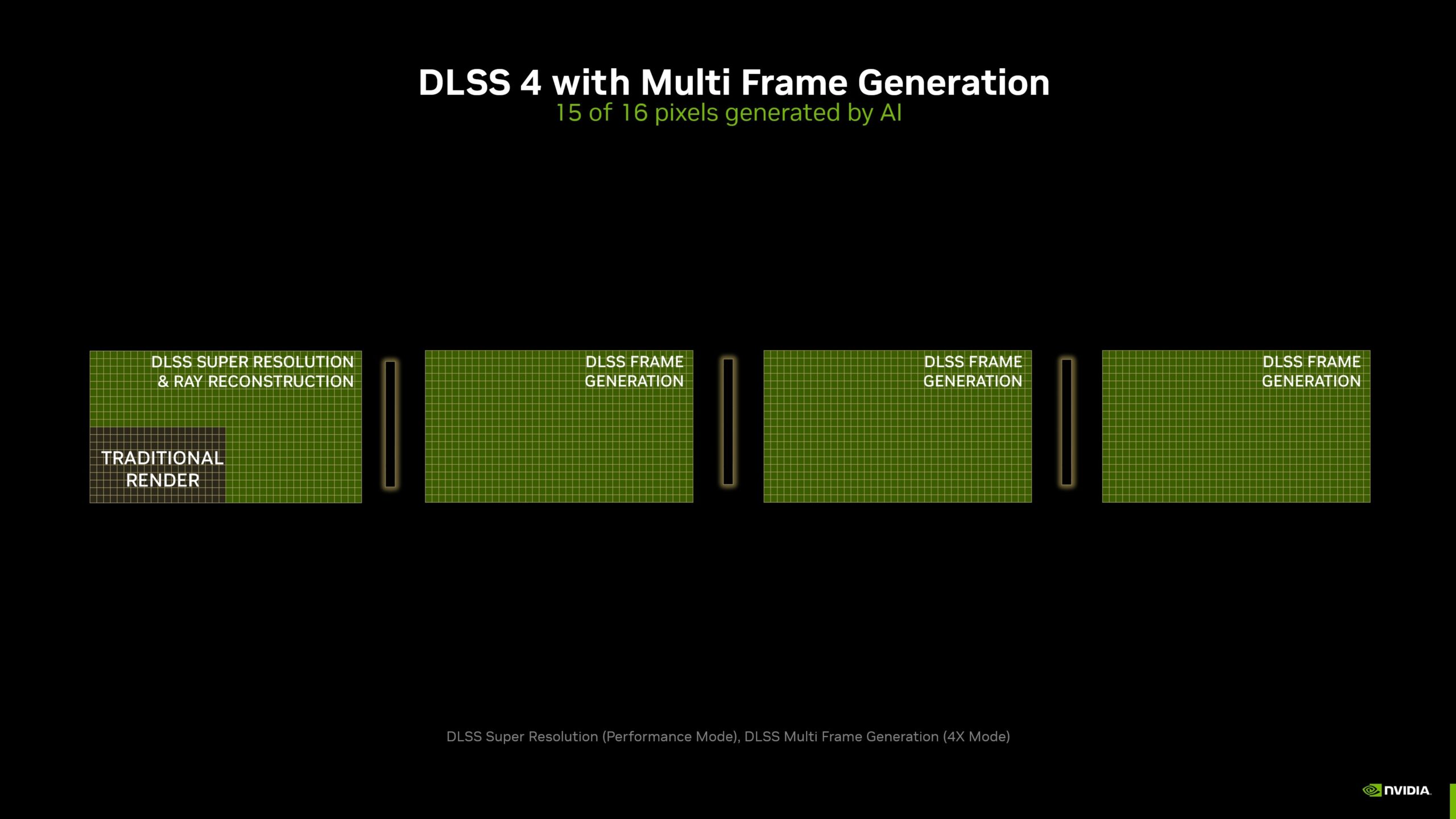
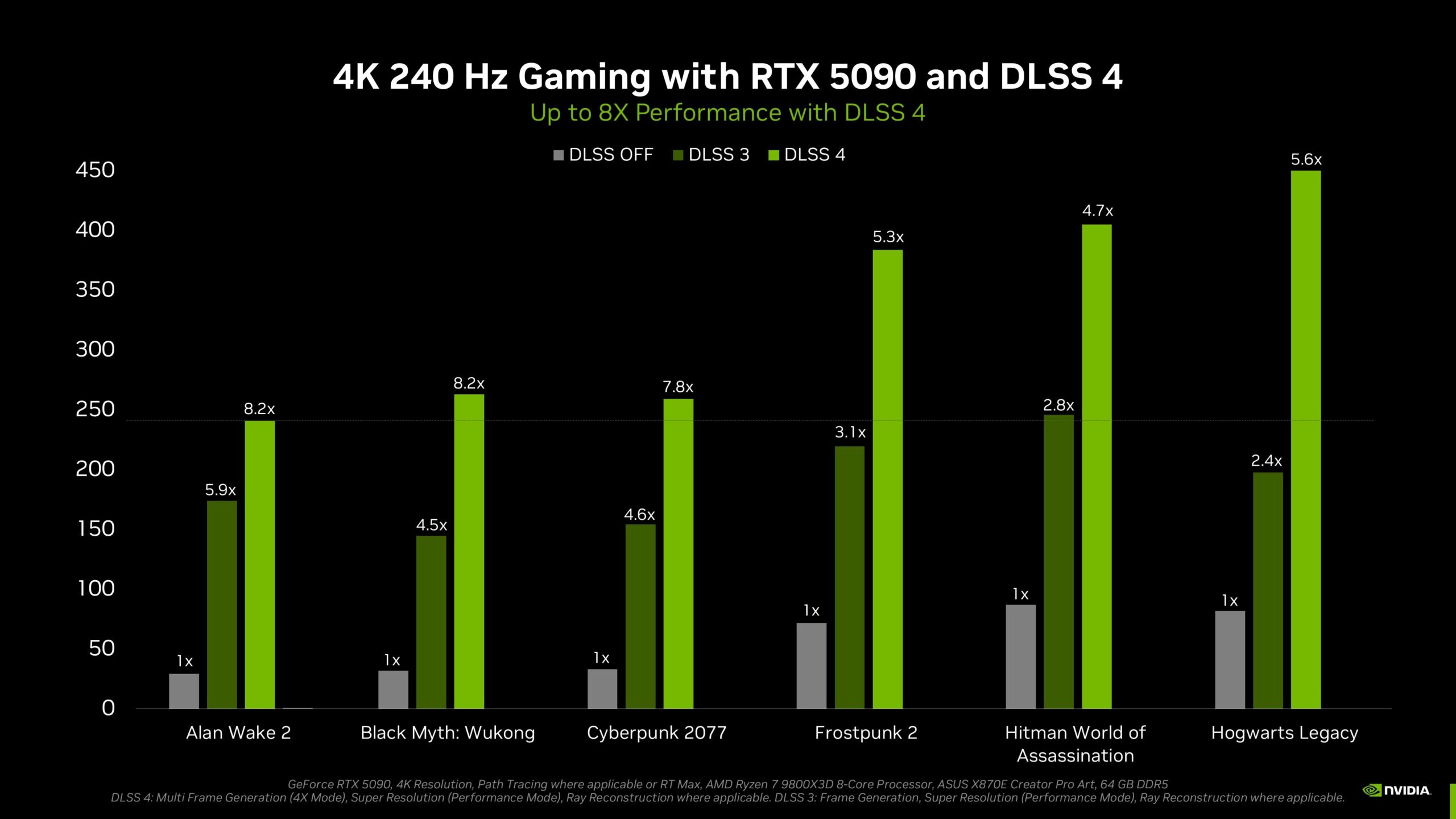
DLSS 4 and Multi Frame Generation
It has to be said that the Multi Frame Generation is a little above our head. We can understand upscaling a single frame as you do with regular DLSS Frame Gen, but multiple frames? The only way those three extra frames will be accurate is working out what needs to be rendered based upon user input. But doing that is the whole point of a GPU. So where does the AI come in? Or, perhaps, how is what the AI cores are doing any different from what regular rasterisers do? We’re certain there must be a difference, but, again, it’s above our head. There is a reason we don’t have doctorates.
Nonetheless, this looks like witchcraft. Maybe it is, we haven’t checked the sacrificial altar recently. All we can tell you is that it works. And not “it works” in that the image is a smeary, blurry mess at a high frame rate. It works so well you couldn’t tell which frame was actually rendered and which was made up.
Regular DLSS
For those of you who prefer the most possible frames generated traditionally, or play games without MFG, regular DLSS is improved too. The algorithm has been refined to have a smaller video memory overhead. Perfect for mid-range cards. Additionally optimisations have improved the raw FPS number. DLSS 4 introduces a transformer architecture which can sample much more accurately, and gauge long-term model requirements. The tl;dr of which is that transformer based DLSS has much sharper textures and is much smoother in motion. An in-driver Reshade sharpening functionality if you will.
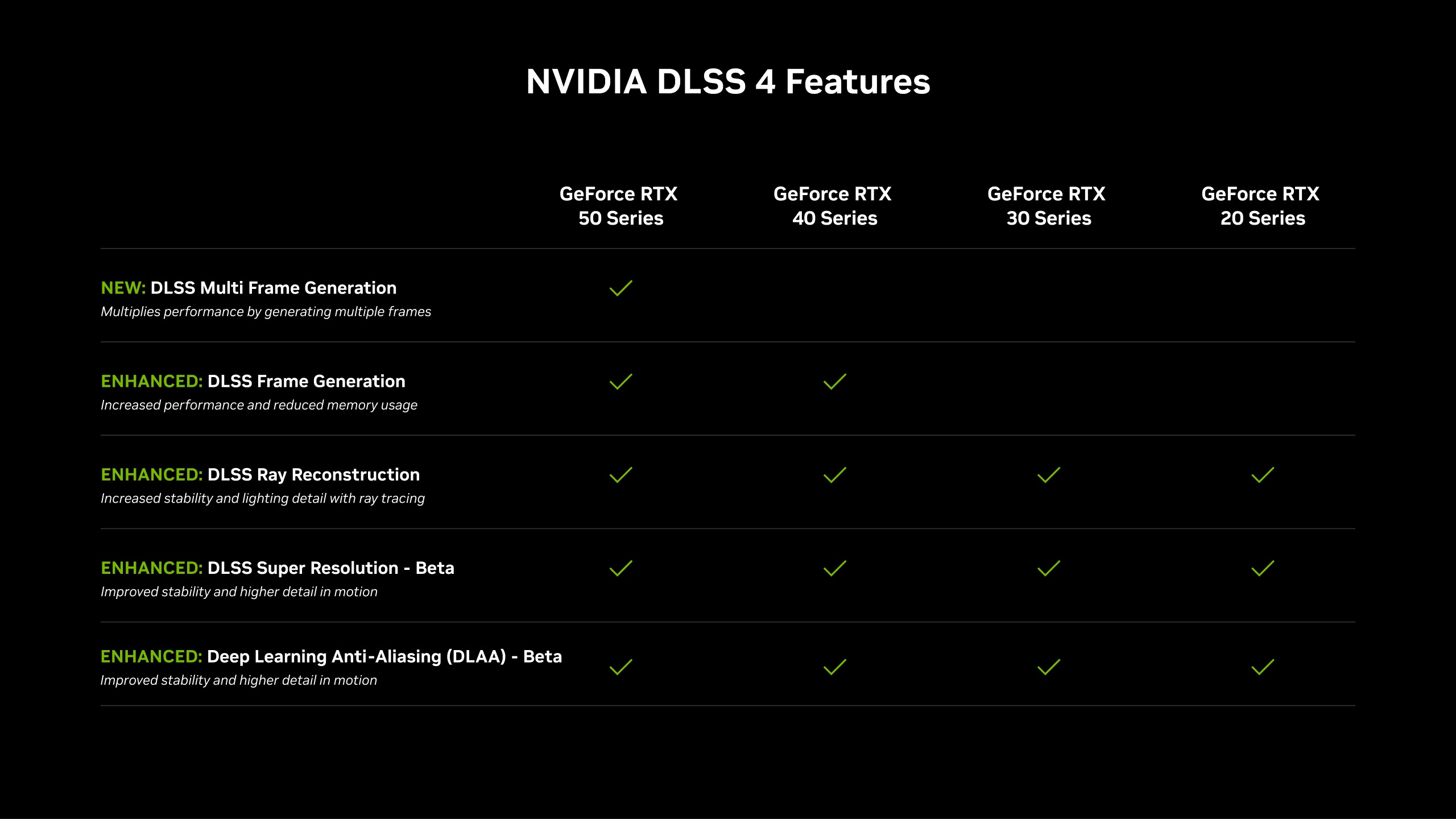
Any time there is a new technology it’s difficult not to ostracise those with older hardware. DLSS 4 does the least amount of “your GPU is too old” with only Multi Frame Generation being unique to the Nvidia RTX 5090. Naturally the newer your card the better it can do it. The 4000 series in particular was a huge leap forwards in performance over the early RTX cards. The Blackwell models though look like they’ll annihilate even the RTX 4090. We know. Madness.
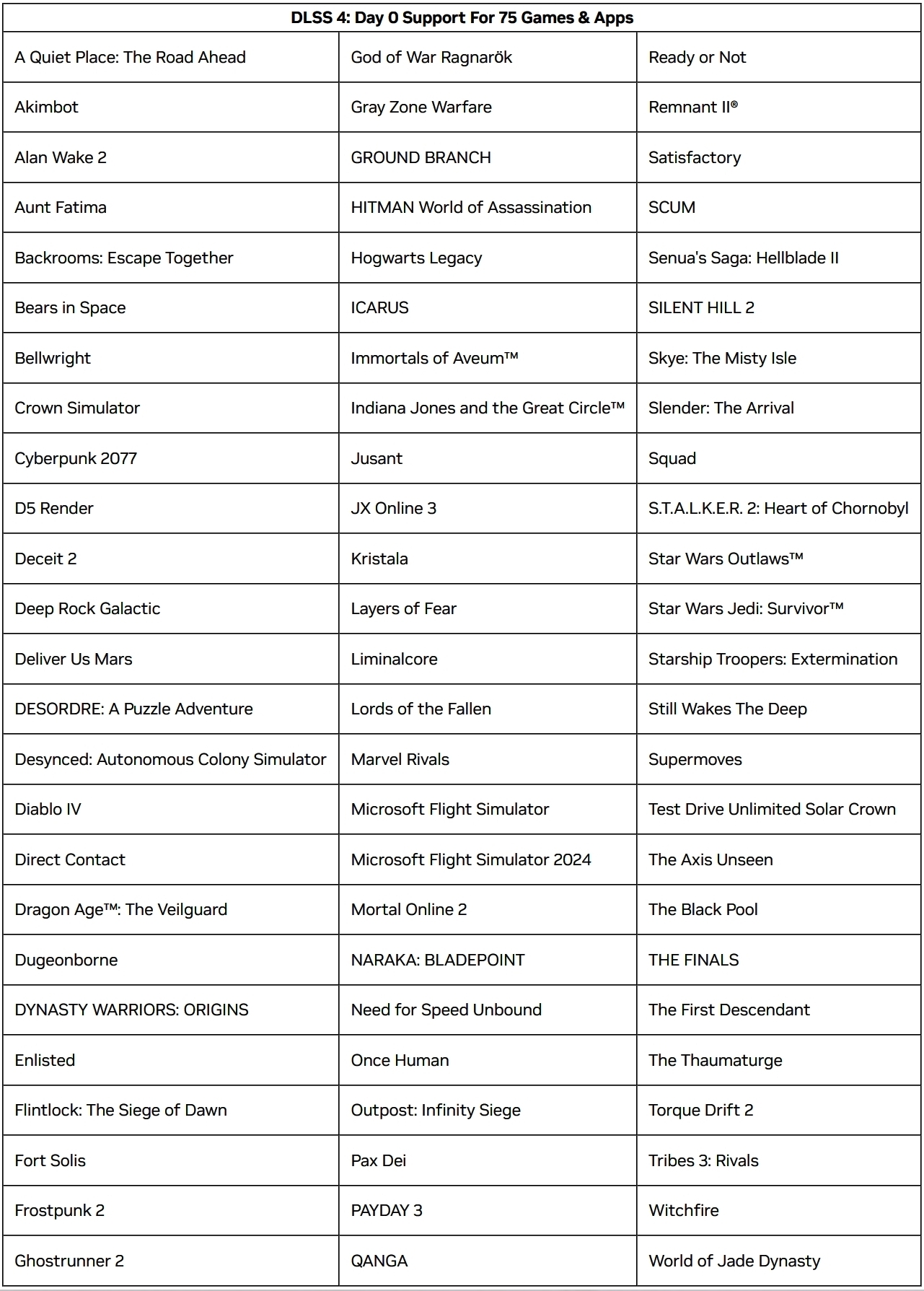
A technology is only as useful as its support. Day 1 there is MFG support for 75 games, and here they are. Any excuse to replay Ragnarok or Hitman is one we’ll take.
Nvidia Reflex 2
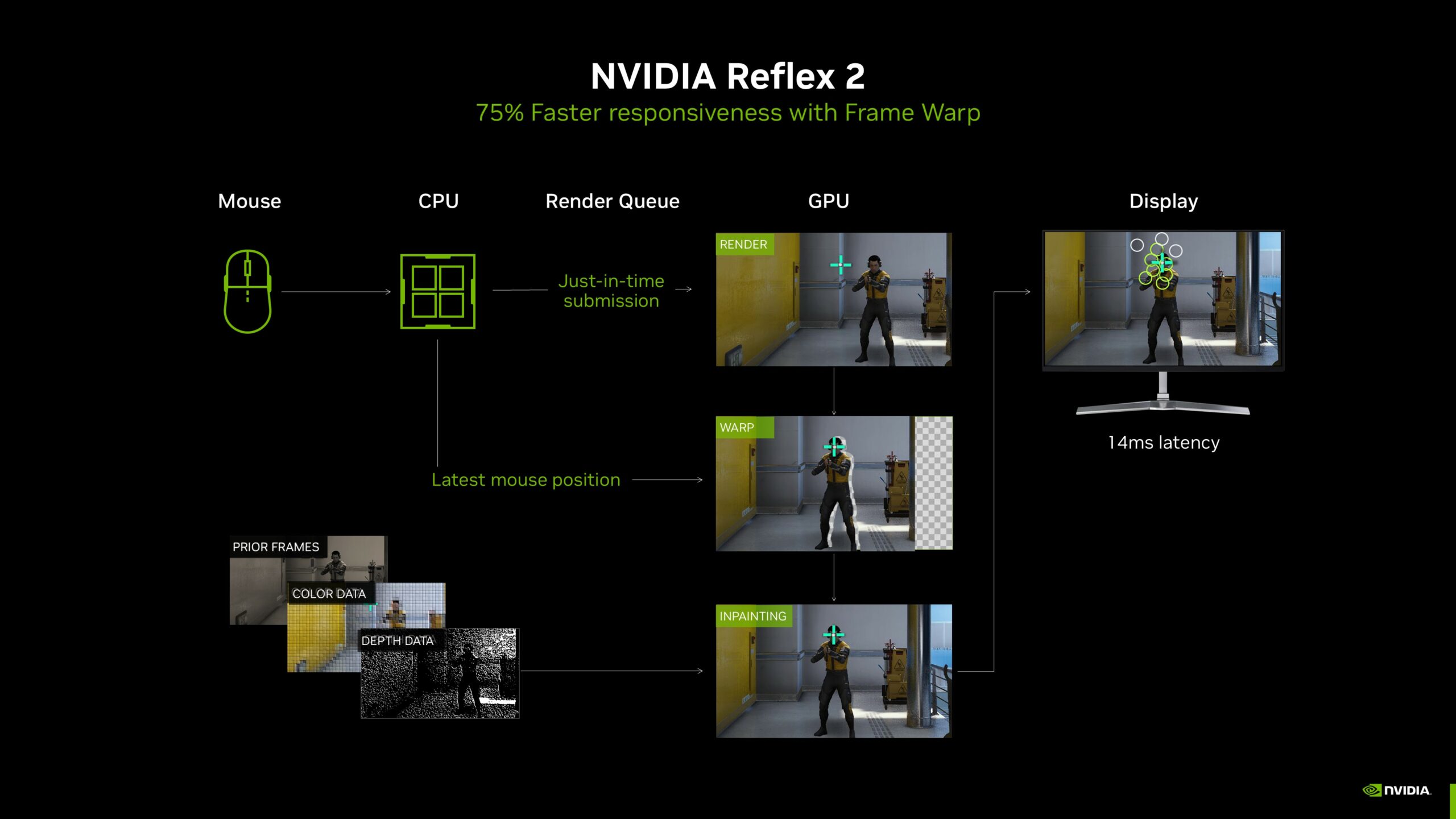
The original version of Nvidia’s Reflex technology made a massive change to the responsiveness of games. This is particularly beneficial in competitive titles. The original version controlled the CPU to skip the render queue, freeing up CPU cycles to sample the mouse inputs just before rendering, for snappier responses.
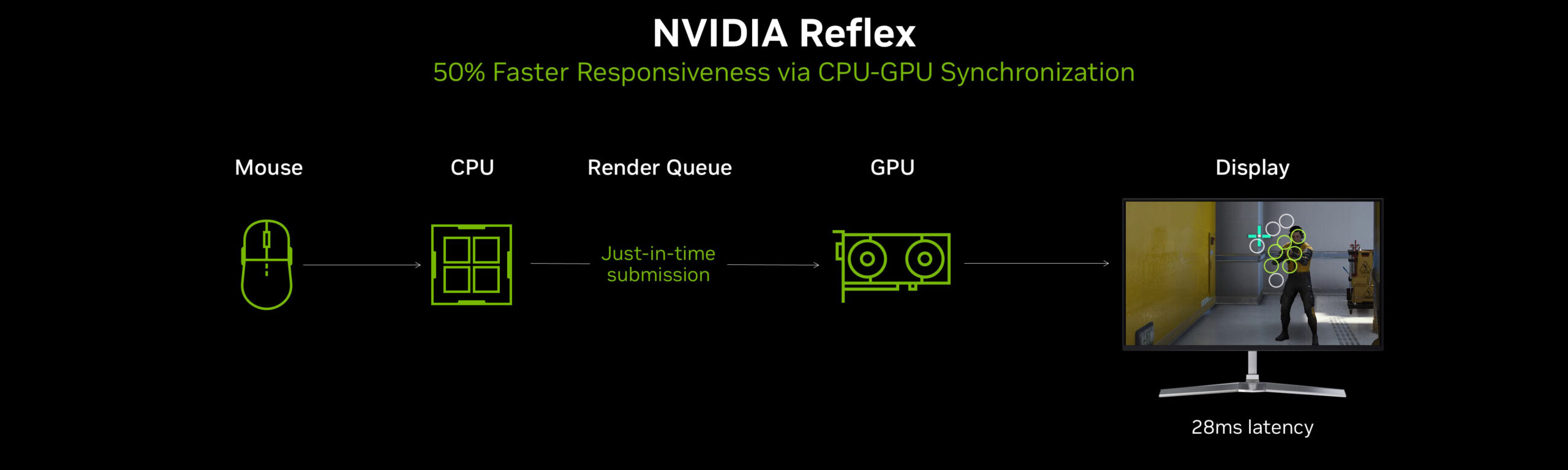
Reflex 2 combines the mouse and controller sampling at the last possible moment with knowledge of the next frame. By utilising the users movement it can work out where the camera will need to be and then interpolate what’s already been rendered with what will need to be rendered. This displays the most accurate representation of your cursor, rather than showing where it was a few milliseconds ago. So the GPU renders the frame, the CPU works out where your mouse is, and the frame gets shifted – as you can see below – using what has been rendered. By warping this you get the most accurate, up-to-date camera, and then inpainting fills in what hadn’t already been rendered by the GPU. It’s magical for those who need the most responsive targeting.