

ASUS ROG Maximus Z890 Extreme Review

Introduction and Technical Specifications
Introduction
We’ve been around the block long enough that we recall when there were just a couple of ROG models for each chipset. When it came to today’s model, the Maximus, we usually had the Formula and the Extreme. Since then we’ve seen lots of other names but this is a Maximus Extreme. It might be a minor thing but the name definitely hits our nostalgia spot. As this is the flagship model in the ASUS Range, it is fitting it has the Extreme name in place.
Later this month we have the new Intel processors launching, the Ultra 200S. With a lot of new Intel processors you get a new socket, and new chipset, meaning a new motherboard. The LGA1700 socket actually lasted a surprising amount of time. Certainly by Intel standards. But it’s time to bid farewell to our old friend and meet the new boss. LGA1851 socket is the new Intel daddy, ready for the high efficiency, cool, NPU enhanced Intel Ultra CPUs. Okay they might not be the kind of performance step forwards we’re used to, but they’re much cooler and more energy efficient. They’ll be epic in laptops.
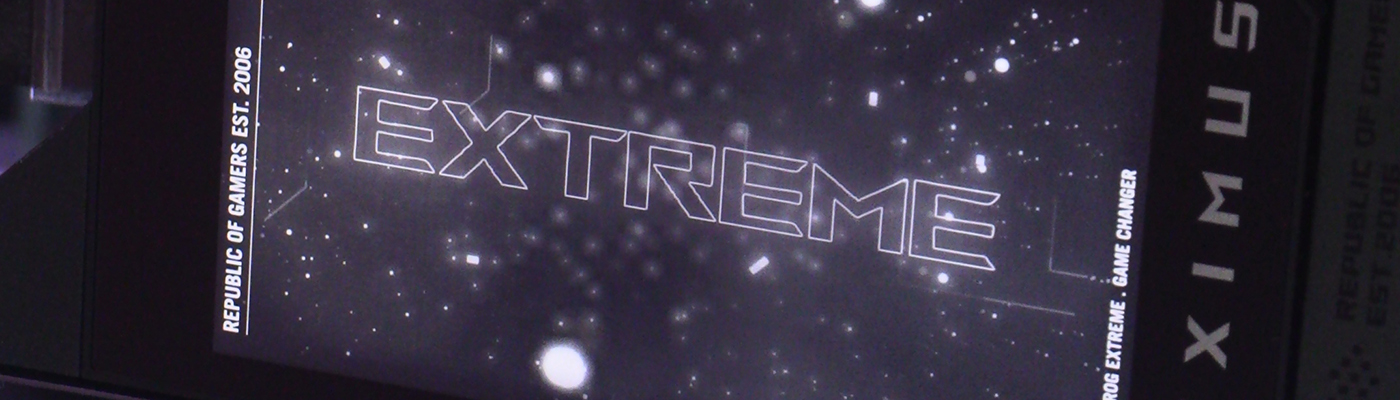
We have got the Apex on hand, and today you’ll also be able to read our review of the Hero. However, this is the third in the triumvirate of ASUS ROG Maximus models, but perhaps it’s the one that will attract the most attention. Not only is it the Extreme, and we know how people react to that word, but the screen on it is godly. If you’ve loved the idea of an in-case screen showing hardware monitoring, this Z890 Extreme does that but without needing extra screens.
Technical Specifications
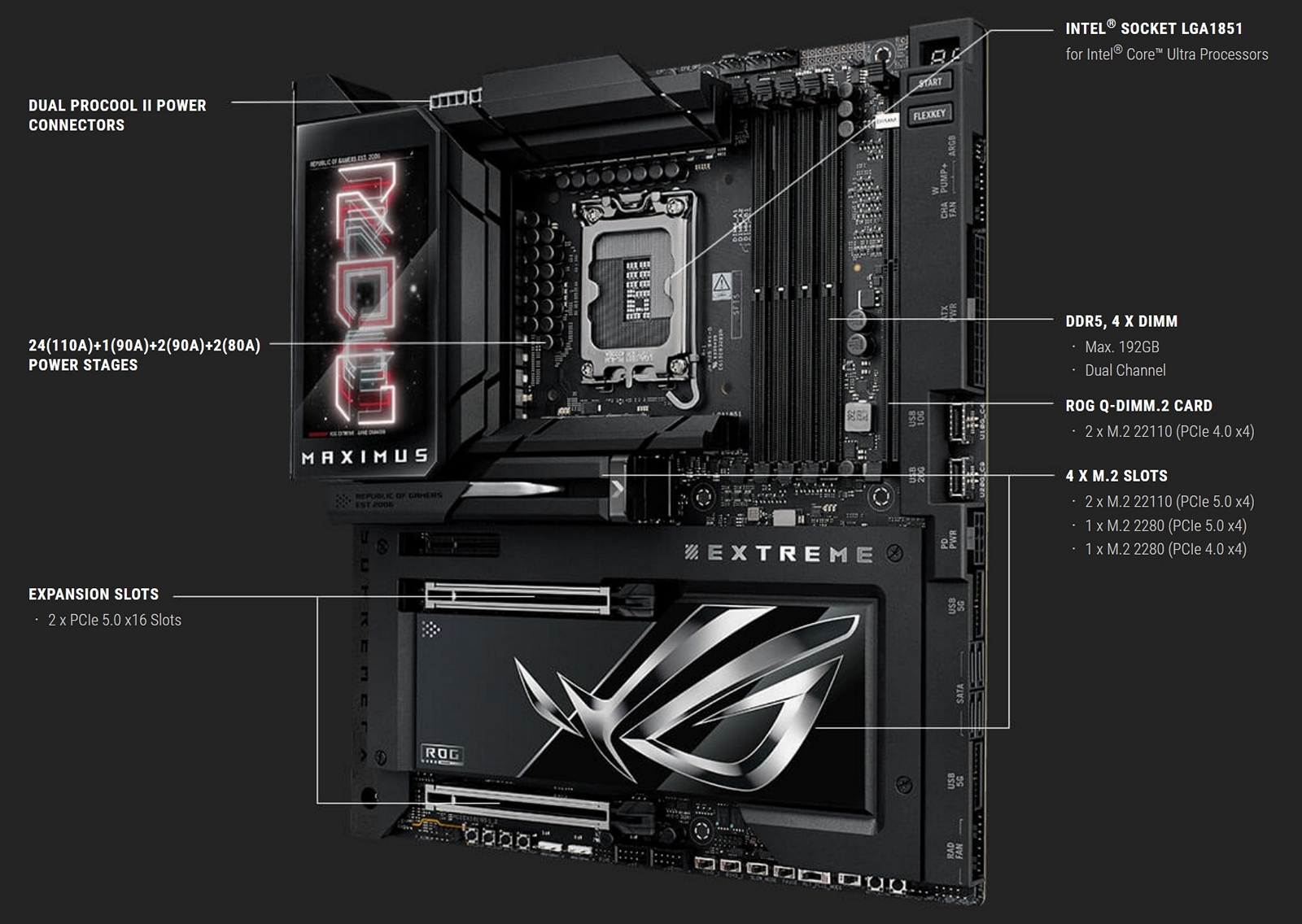
The Maximus Extreme isn’t short of flashy, flagship elements to entice you to open your wallet. One thing we think has been very cool during our initial looks at the three different ASUS ROG Maximus Z890 motherboards is how similar they were. Each has its own unique element – white for the Apex, Horizontal connectors and screen here, serious connectivity for the Hero – but there are a lot of similarities too. The power stages are the same, insane, 24+1+2+2 110A ones across the board. 110A for the VCCCORE, 90A for the SA, and 80A for the VNNAON, which is a Ultra Low Power architecture that supports always on memory pathing.