

How Intel supercharged mobile and gaming with Panther Lake

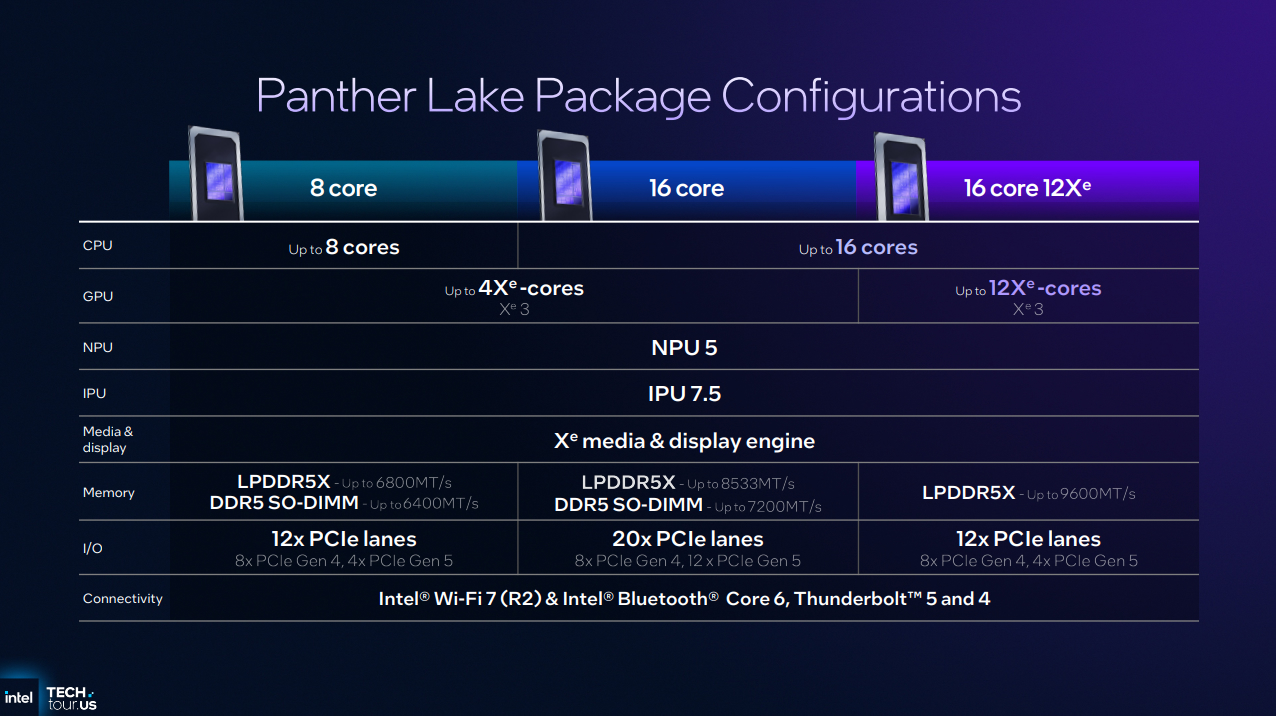
Panther Lake Package Configurations – Huge Scalability
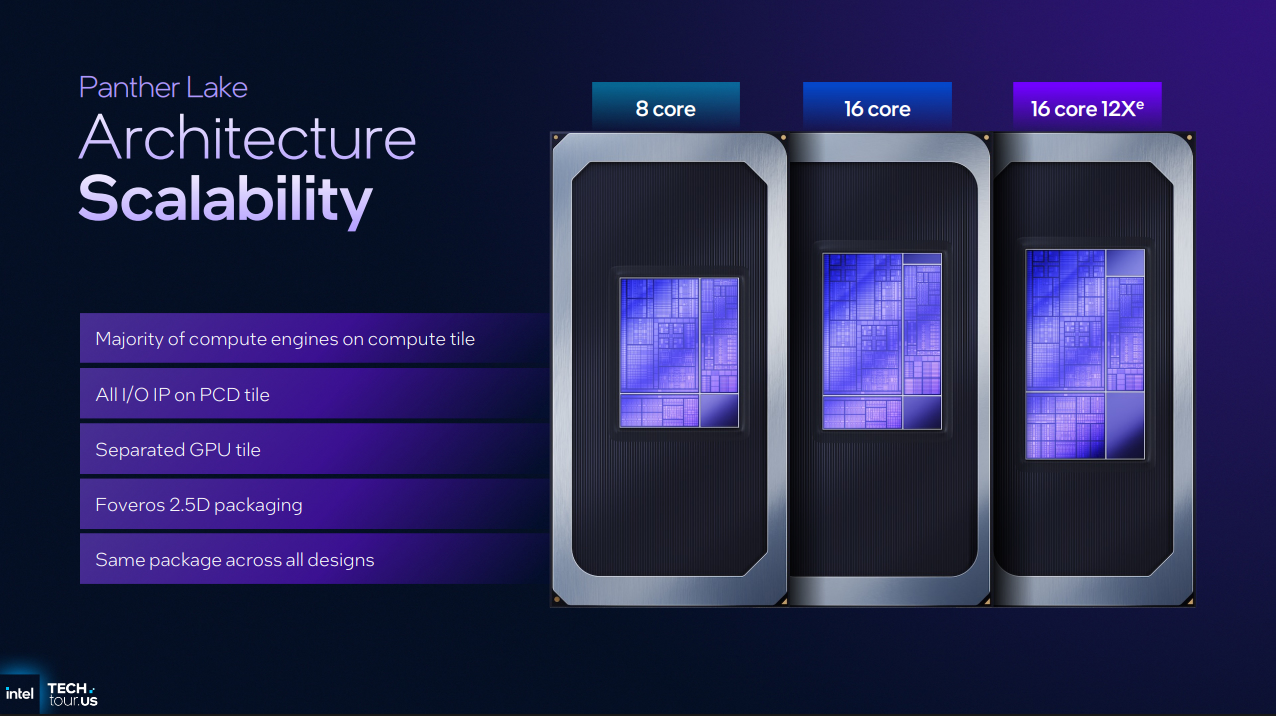
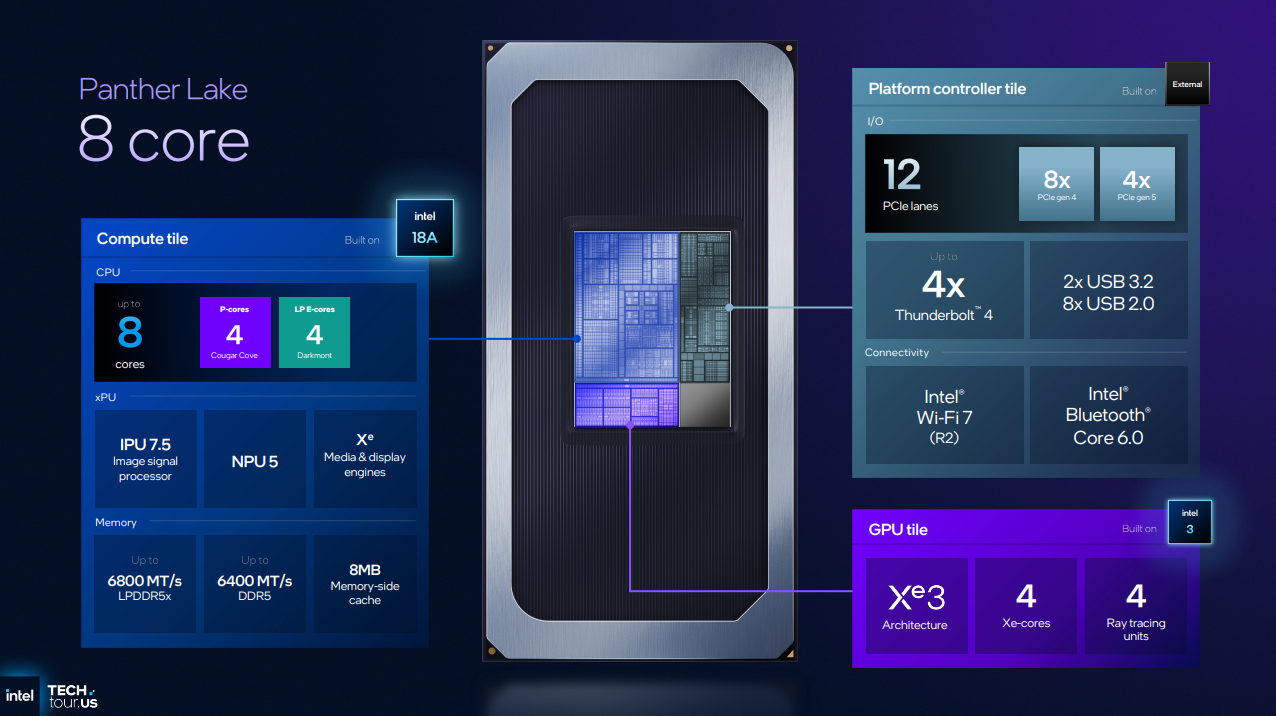
Panther Lake Options
The first of Intel’s Panther Lake chip options is an 8-core model. This model features 4 P-cores and 4 LP-E Cores. Like all Panther Lake designs, this chip uses Intel’s NPU 5. It also features 12 PCIe lanes, WIFI 7 support, and Bluetooth 6.0 support. It also features a 4 Xe core Xe3 graphics chip.
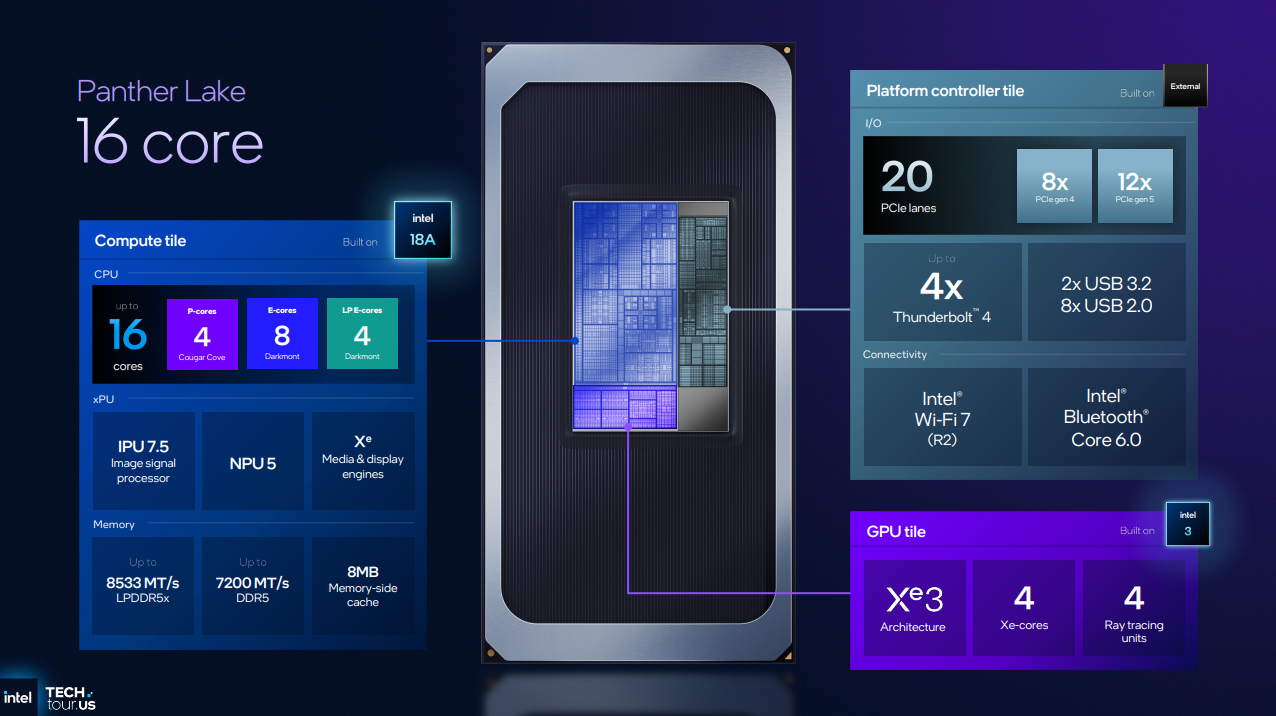
16-core Model
On the higher-end, we have a 16-core CPU model that has a larger platform controller tile and a larger Compute tile than Intel’s 8-core model. However, both models feature the same NPU and GPU tile.
The model below features 16 cores, including 4 P-Cores, 8 E-Cores, and 4 LPE-Cores. Note that the high PCIe lane count of this CPU makes it suitable for use with discrete graphics chips.
16-cores and 12Xe graphics
For users who want more GPU performance and don’t want a discrete/separate graphics chip, Intel has the Panther Lake model below. It appears to feature the smaller platform chip of Intel’s 8-core model and a larger 12Xe core Xe3 graphics chip. This is Intel’s flagship Panther Lake chip, which uses Intel’s largest Panther Lake Compute Tile and GPU Tile. It’s smaller platform tile is likely for cost reasons, as CPUs with this large GPU are unlikely to be paired with discrete graphics.
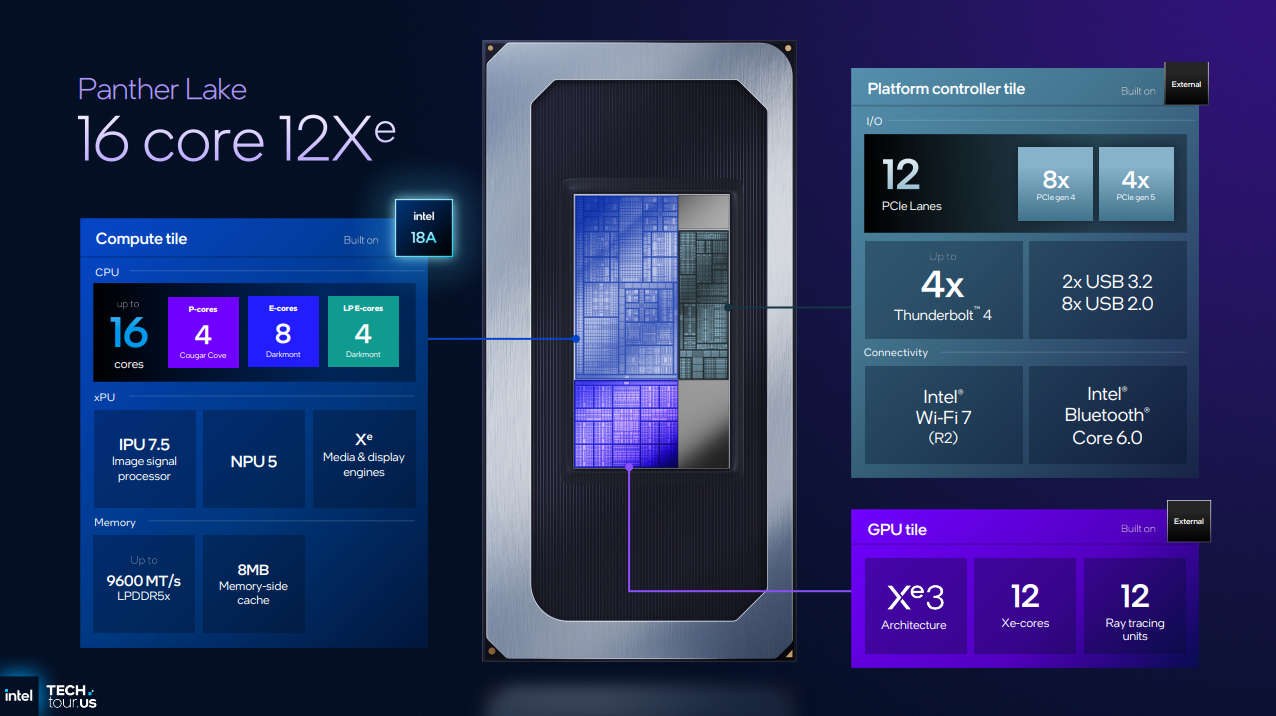
As we move up Intel’s product stack, we get support for faster DDR5 and LPDDR5X memory modules. All models feature the same Intel NPU and IPU designs, as well as the same connectivity features. The only significant IO change between models is the number of PCIe 5 lanes they support.