


How Intel supercharged mobile and gaming with Panther Lake

New Cores – Cougar Cove and Darkmont
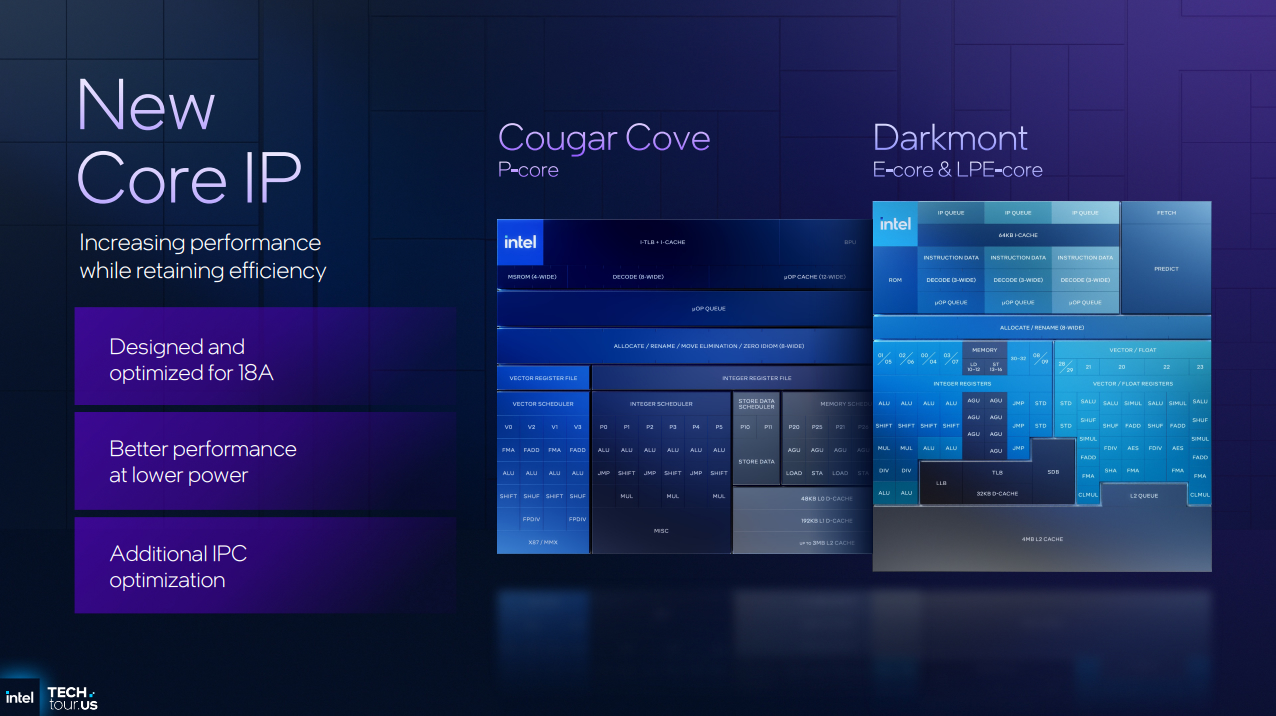
Intel Panther Lake Deep Dive – CPU Cores
Now we are getting to the meat of Panther Lake. Intel want to deliver the efficiency of Lunar Lake and the multi-threaded performance of Arrow Lake. That doesn’t happen unless you have more performant/efficient CPU cores. With Panther Lake, Intel has new P-Core and E-core architectures to deliver some of these gains. Add on Intel’s new 18A silicon, and we have ample avenues for improvement.
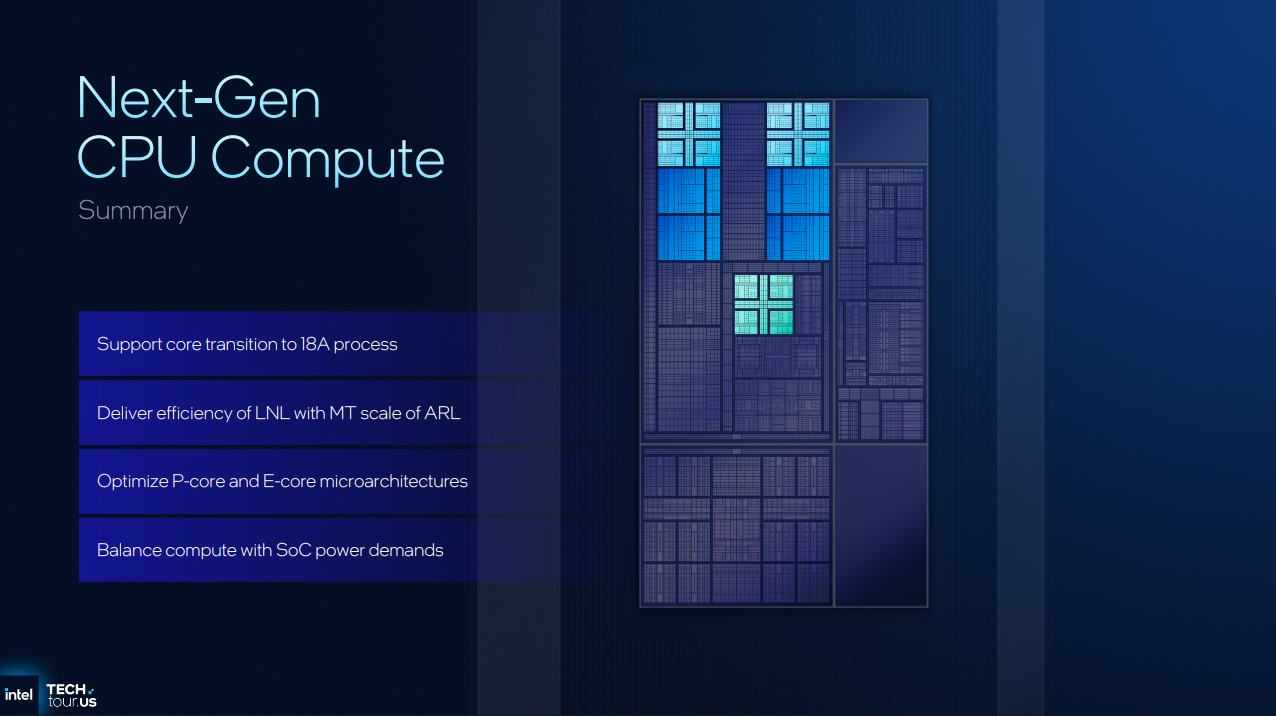
New Cores
As mentioned before, Panther Lake features new P-cores and E-cores. Lion Cove P-cores have been upgraded to Cougar Core. Skymont/Crestmont have been upgraded to Darkmont. These new cores are optimised to deliver increased power efficiency and performance.
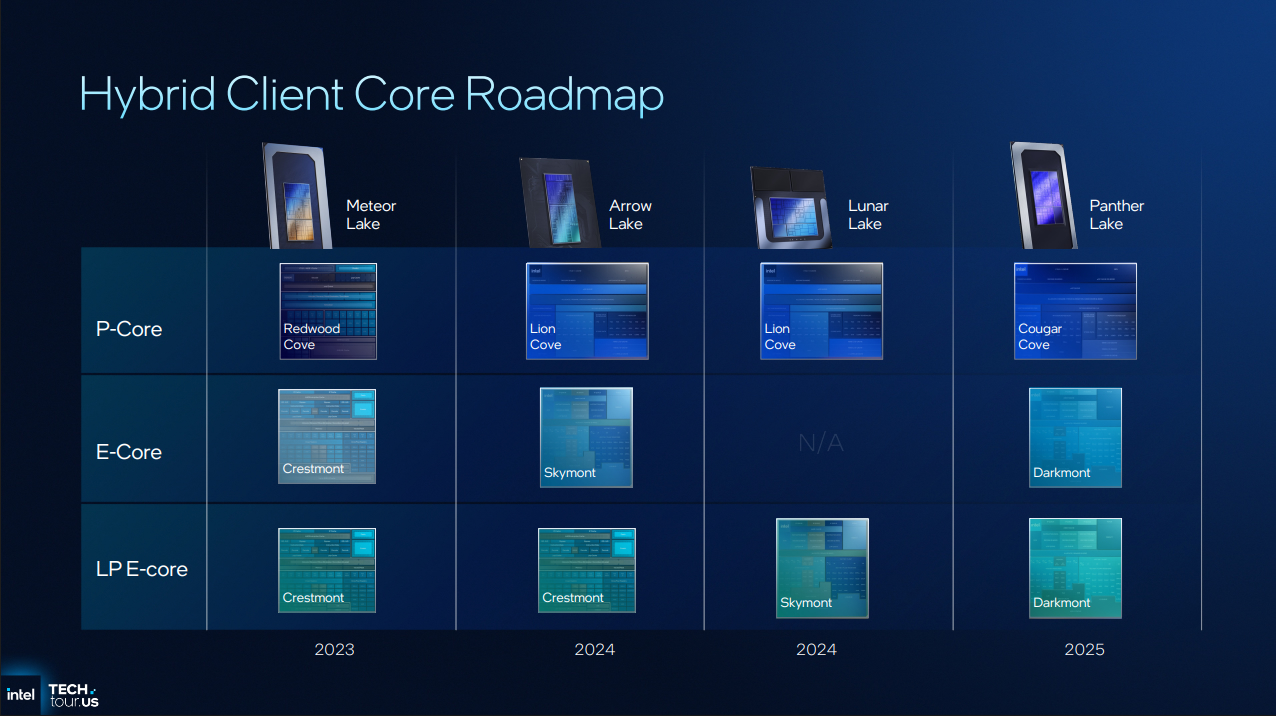
Cougar Cove
One of the first benefits that we will mention is Panther Lake’s larger L3 cache for its P-cores and E-cores. Intel has given Panther Lake a 50% larger L3 cache, keeping more data on chip to enable faster, more power-efficient execution.
For the most part, Cougar Cove’s alterations over Lion Cove are about optimisation. No part of the core has undergone a fundamental redesign. Everything has been refined to deliver more performance and more power efficiency, with a greater focus on power efficiency.
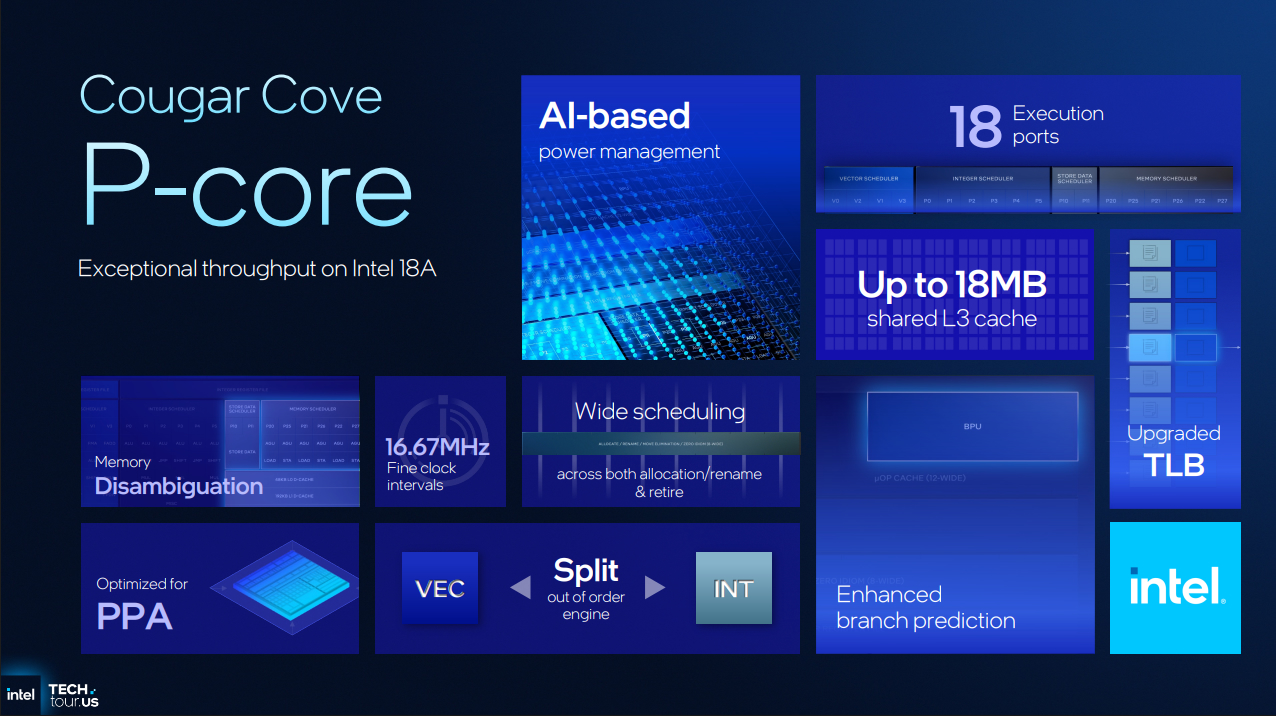
Like most new CPU architectures, Cougar Cove delivers improved branch prediction. Intel has also added capacity to its TLB (Translation Lookaside Buffer), which is a cache that has been resized to better suit modern workloads and keep more data on-chip for longer. This saves power and reduces latencies.
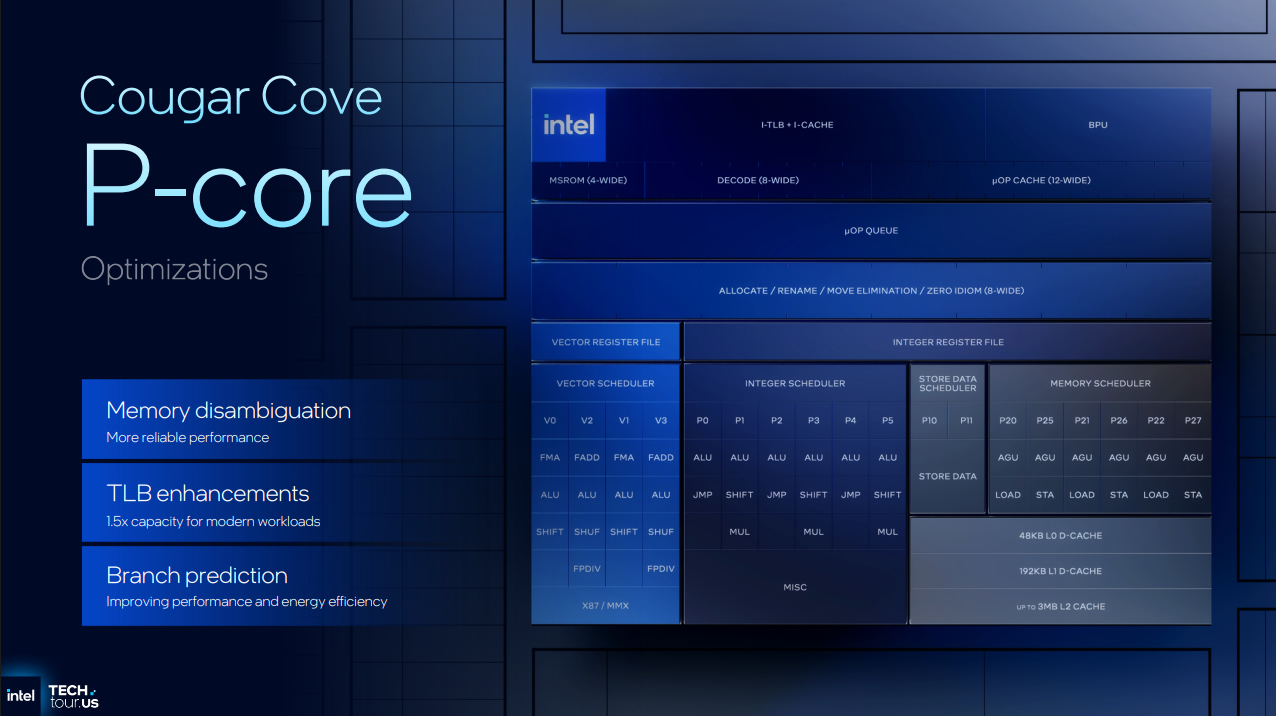
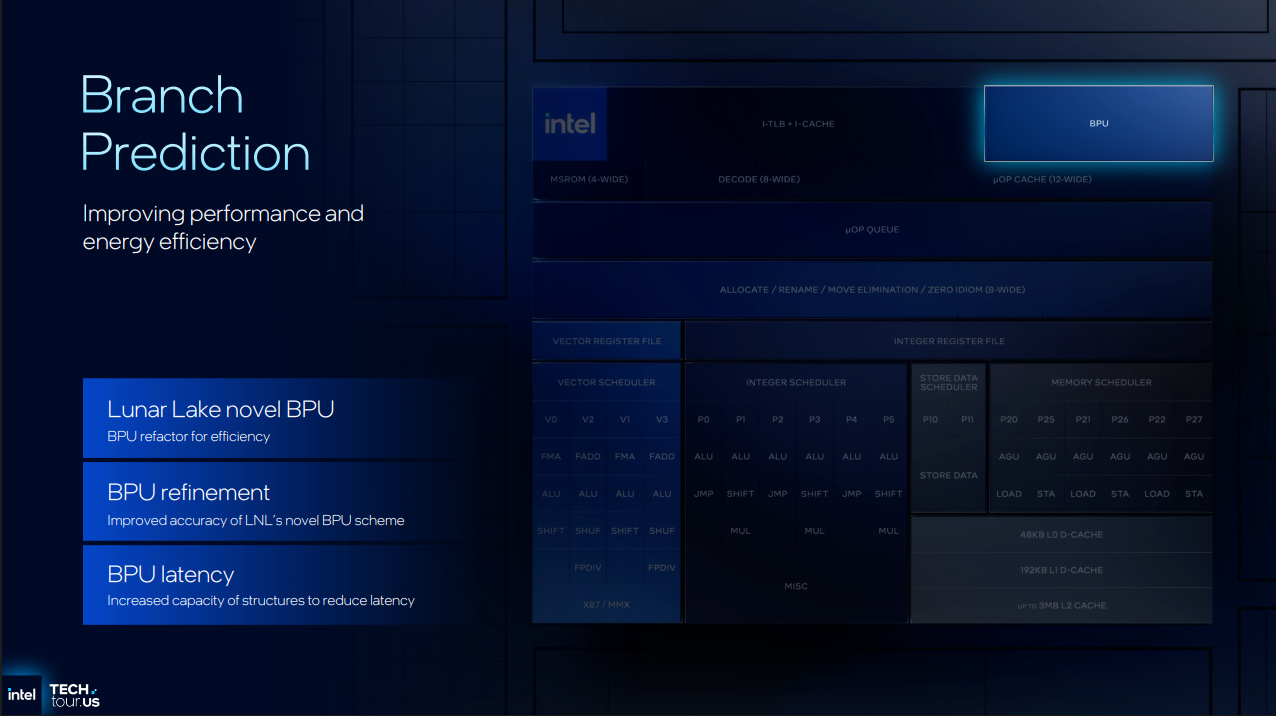
The density of Intel’s 18A lithography node has allowed Intel to resize many structures inside their CPUs. This is why Intel has a larger L3 cache with Panther Lake. It is also why Intel’s Branch Prediction Unit (BPU) and TLB are larger. With Cougar Cove, Intel refactored its BPU to reduce latency and increase accuracy. That means faster responses and fewer branch misses. Those changes deliver power savings and faster throughput.
Darkmont
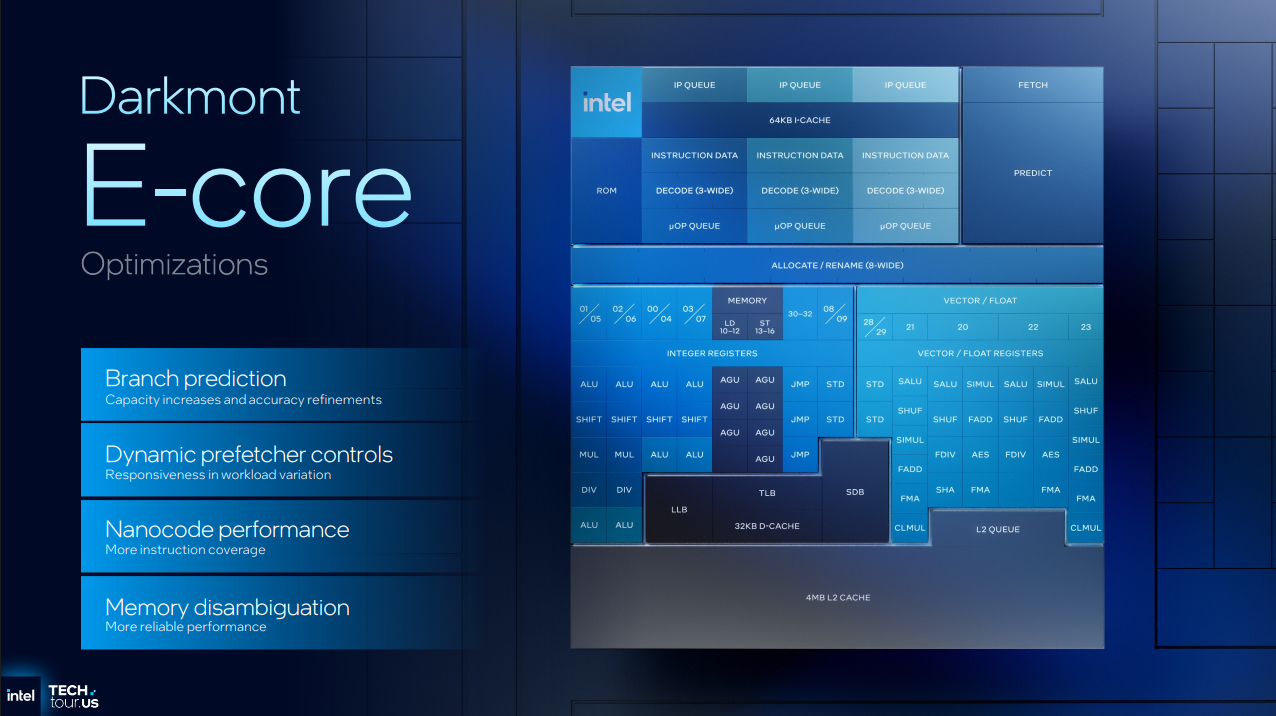
Again, Darkmont is an optimised design. Improved nanocode delivers more instruction coverage, and a larger L2 cache enables lower latencies and saves power. Power efficiency and multi-threaded capability are critical here.
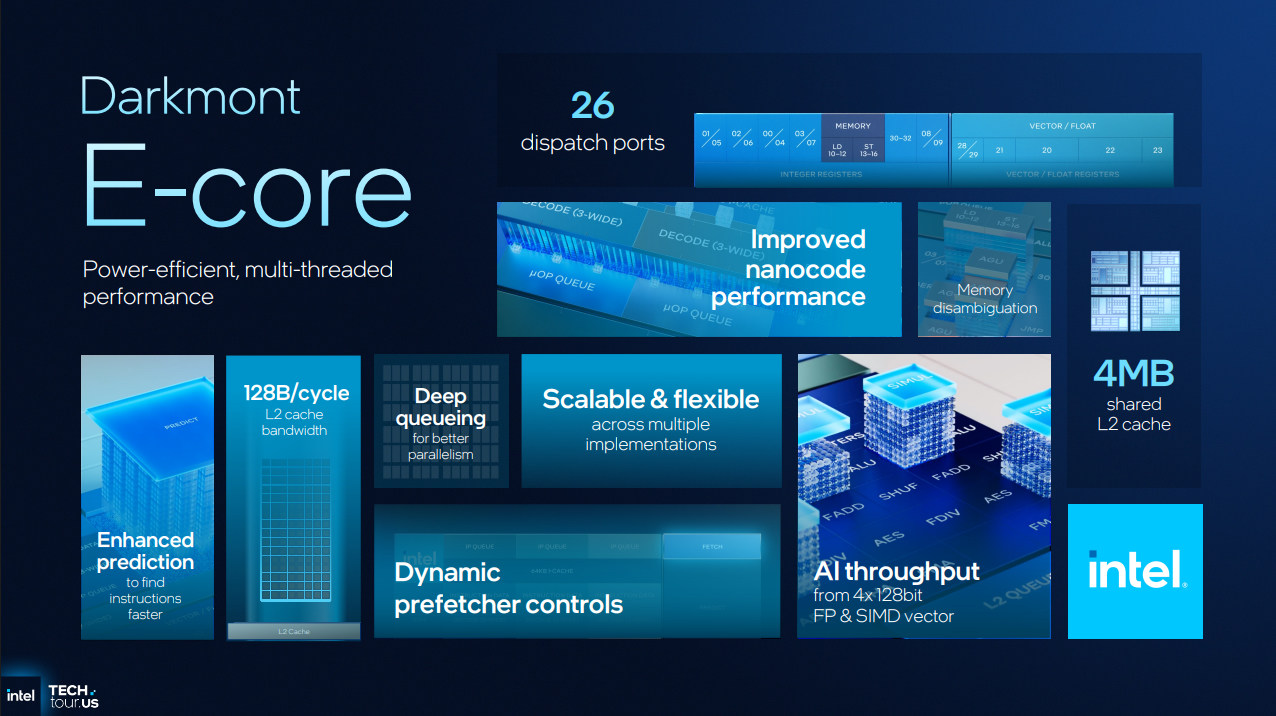
Again, branch prediction has been improved, and memory performance has become more reliable. These are LP cores, designed to deliver strong performance with minimal power consumption. We will see how this impacts multi-threaded performance later.
Single-threaded and multi-threaded performance
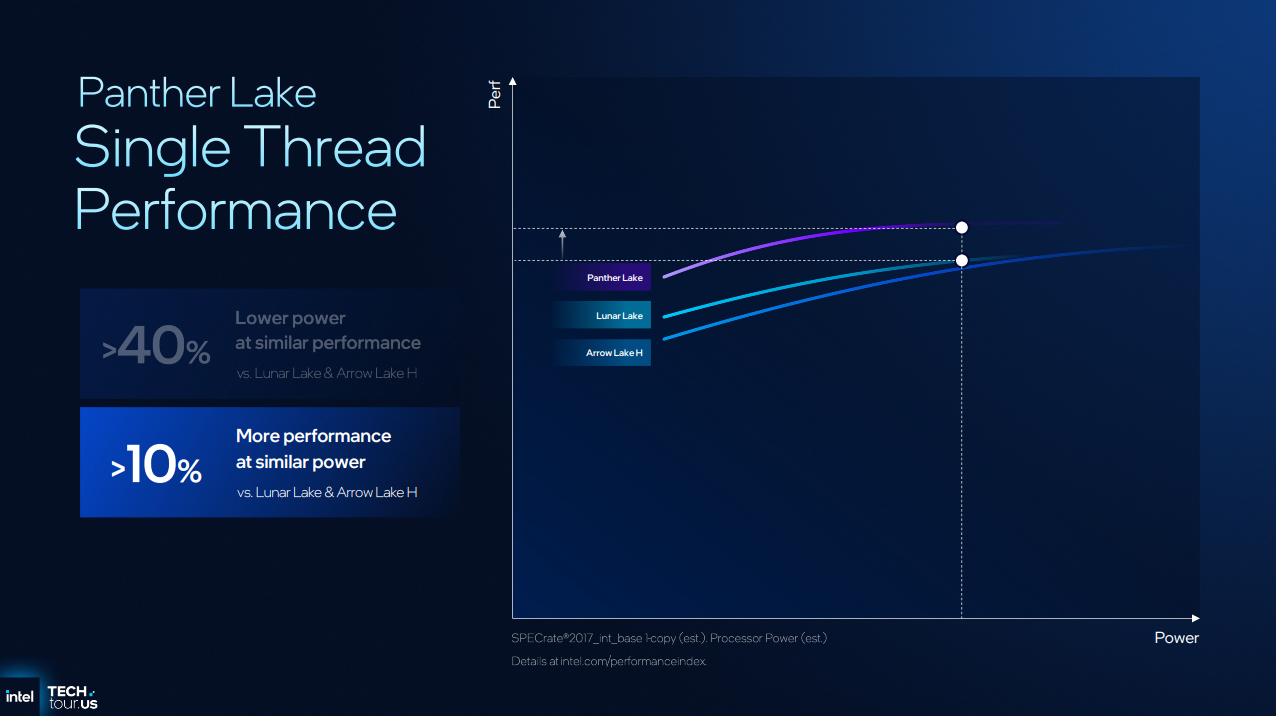
Compared to Lunar Lake and Arrow Lake-H, Panther Lake can deliver more than 10% additional single-threaded performance at the same power. It can also deliver similar single-threaded performance with more than 40% less power.
While single-threaded performance gains aren’t huge, Intel’s power consumption improvements will extend the battery life of devices and make that level of performance available for longer.
Panther Lake truly shines in multi-threaded workloads. It can deliver more than 50% more performance than Lunar Lake at similar power levels, or similar levels of performance to Arrow Lake-H with less power.
Note that the chart below also showcases Panther Lake delivering much higher performance levels than Arrow Lake-H when using similar levels of power.
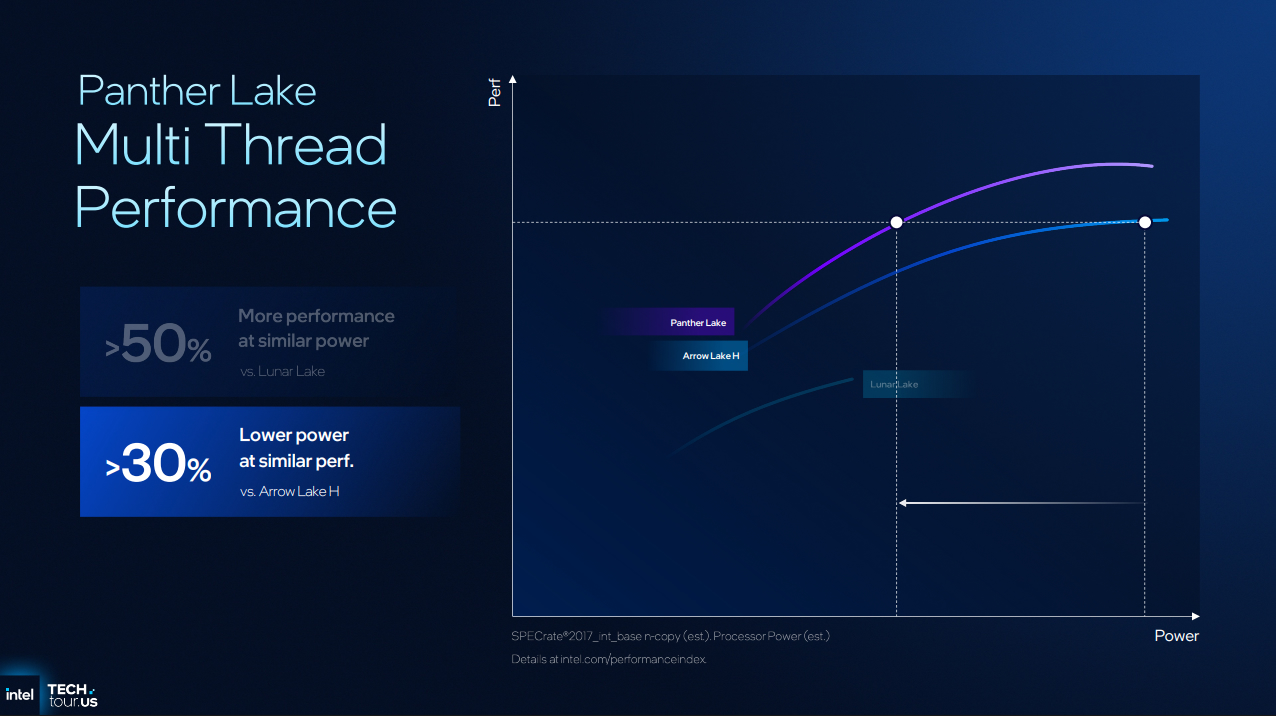
Intel wanted Panther Lake to be efficient, and they succeeded. That’s excellent news for those who want a longer battery life from their devices.
