

Monster Hunter Wilds PC Benchmark Analysis

Frame Generation Testing
Frame Generation in Monster Hunter Wilds’ PC benchmark
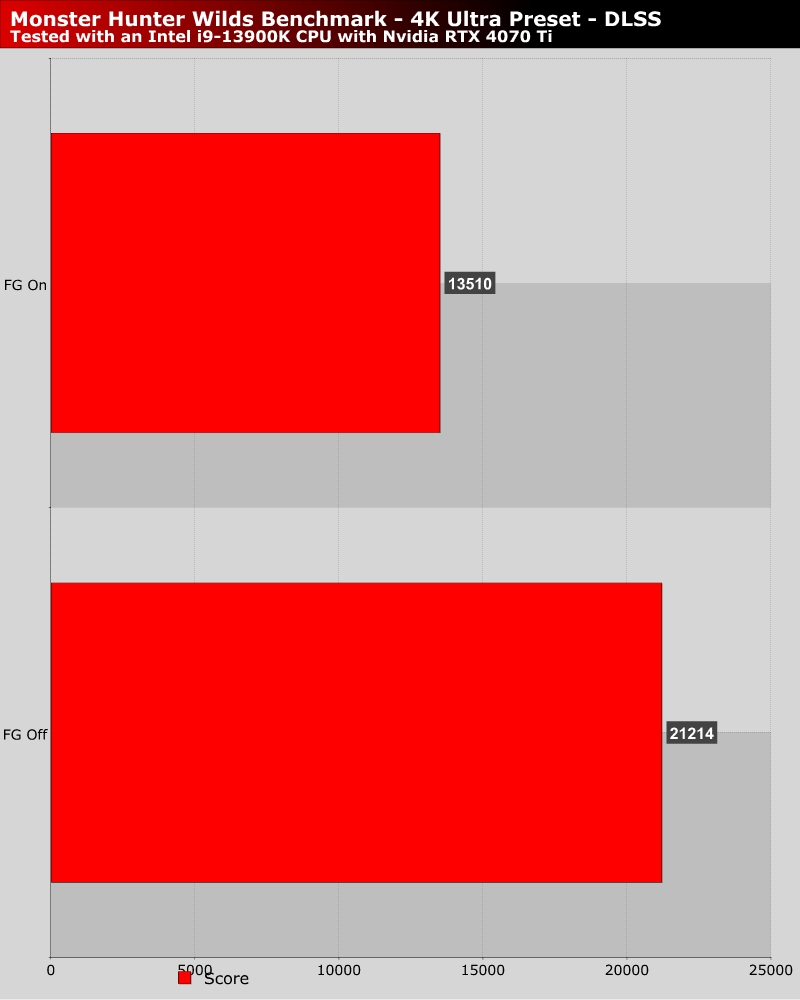
Both Nvidia DLSS and AMD FSR Frame Generation are supported in Monster Hunter Wilds’ PC benchmark. In their benchmark tool, Capcom acknowledges that generated frames are not “real” frames. This is why Frame Generation does not increase the score of the company’s benchmark. In fact, scores are lower with Frame Generation enabled due to its overhead.
Notice how DLSS Frame Generation dramatically lowers the score that we achieved with Nvidia’s RTX 4070 Ti.
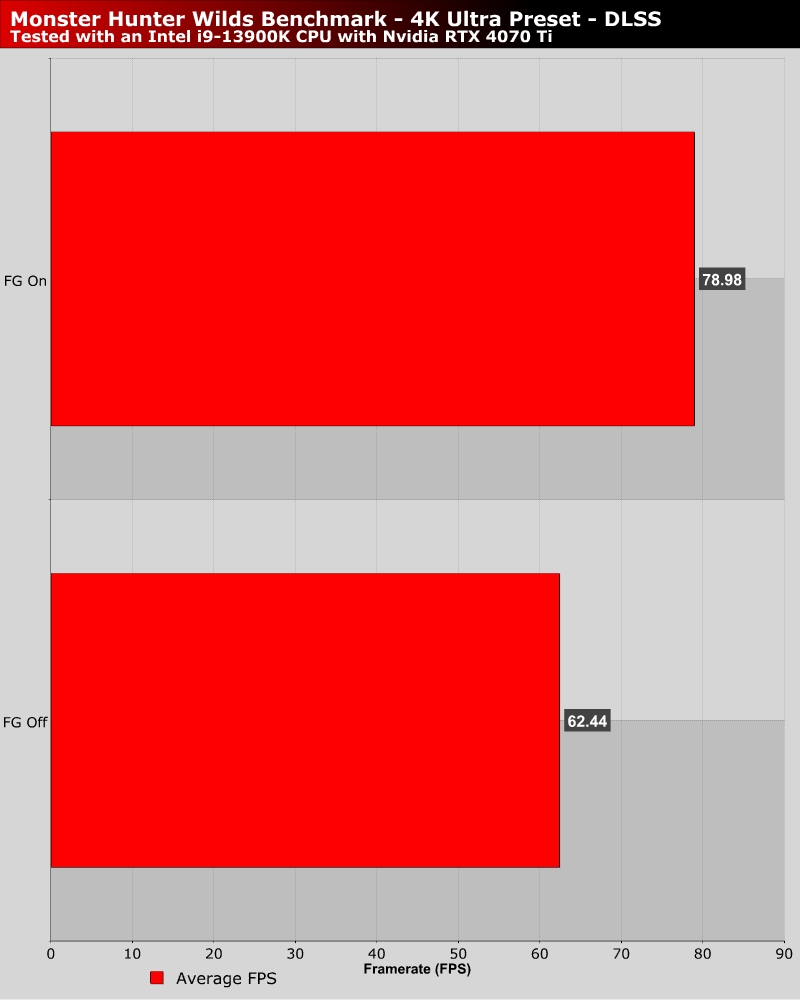
Switching out benchmark scores for framerates, we can see the benefit of DLSS Frame Generation. Enabling Frame Generation enabled higher frame rates. However, it should be noted that only half of these frames are “real” frames.
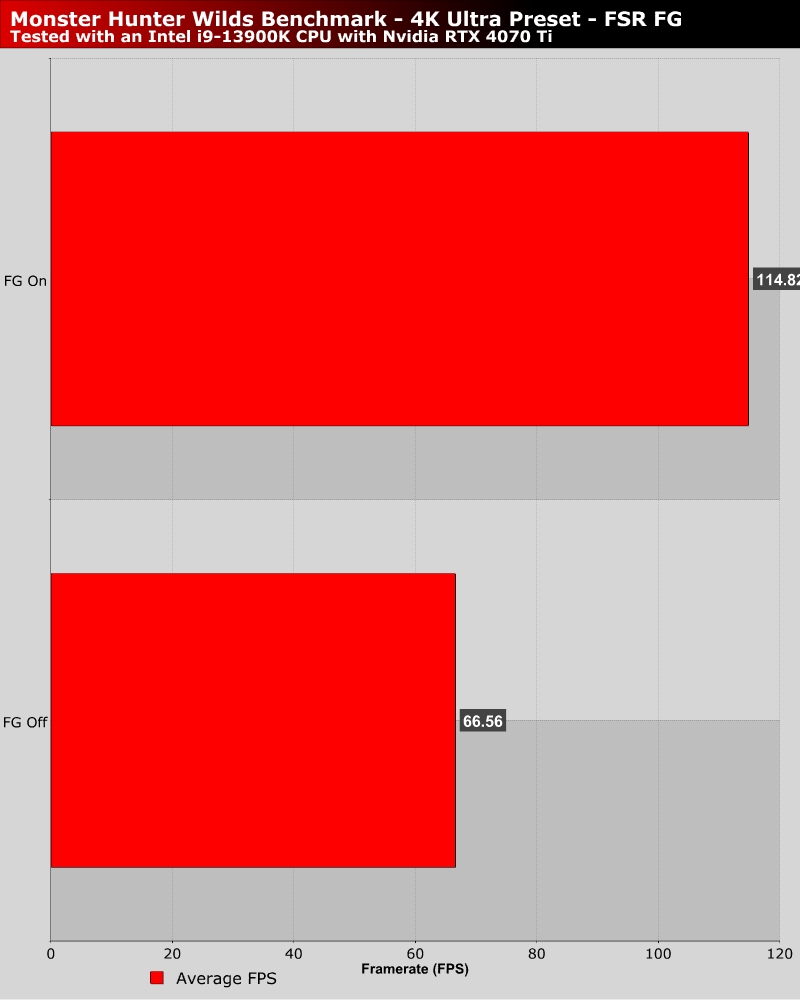
FSR Frame Generation has much less overhead than DLSS Frame Generation
Like in most games, FSR Frame Generation has much less performance overhead than DLSS Frame Generation. Enabling FSR Frame Generation on AMD’s RX 7900 XT results in a smaller drop in benchmark score. This is due to the lower performance overhead of AMD’s Frame Generation technique.
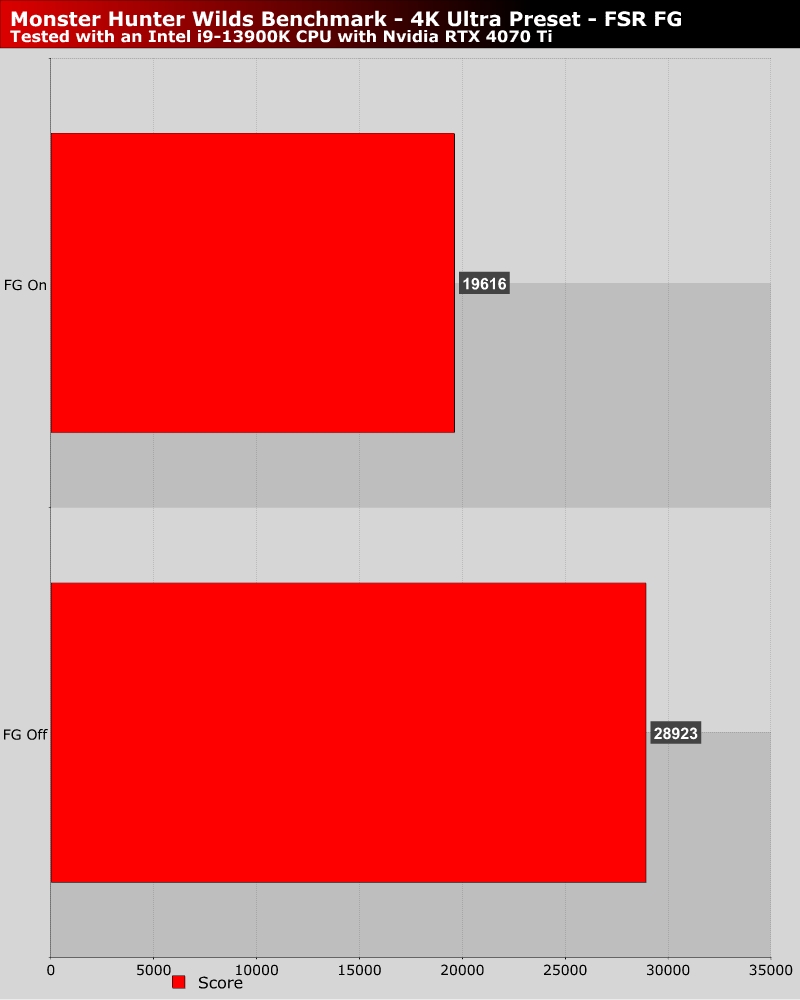
With its lower overhead, FSR Frame Generation can deliver much higher overall framerates than DLSS Frame Generation. FSR Frame Generation presents us with 72.5% more frames, making the game appear much smoother.