

Bambu Lab H2D Laser 3D Printer Review – Make Everything!

H2D Dual Nozzle Benefits (and Downsides)
Saving Filament with two nozzles
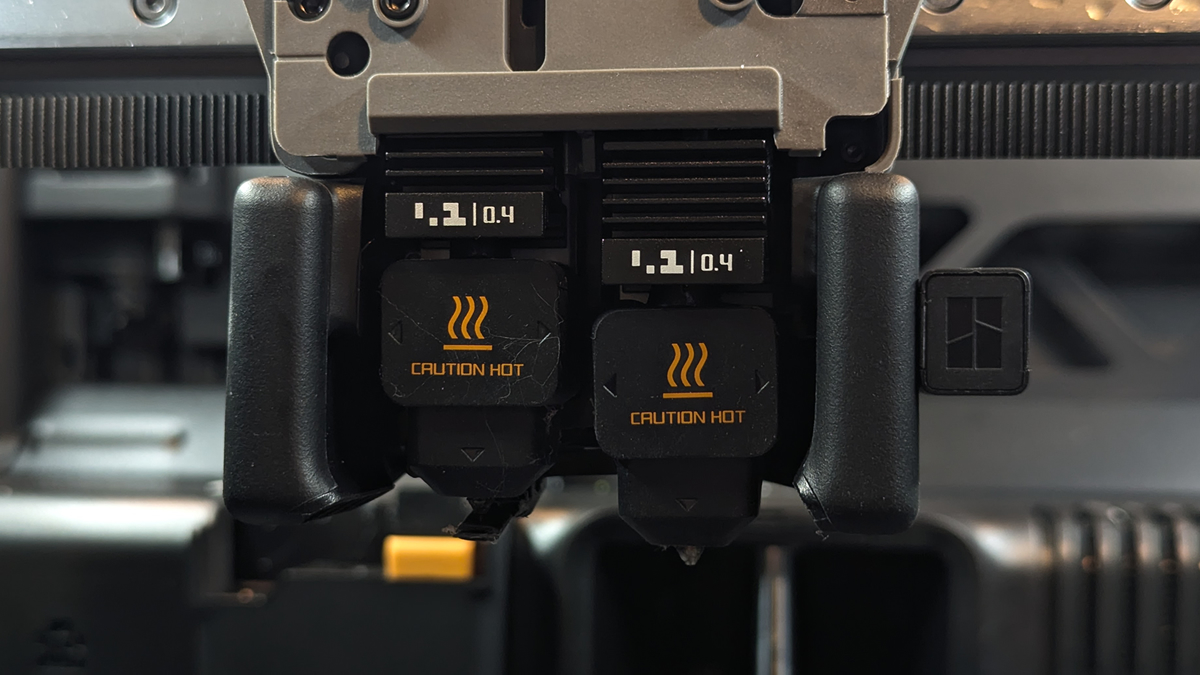
The H2D has two nozzles, and each can be used for a different colour/material. This removes the need for filament switching and purging, saving time and material. For two colour/material prints, no material switches are necessary, making it easy to customise simple prints with more colours.
With one nozzle and an AMS, I would be tempted to do mono-colour prints just to save time. 3D printing can be a long process, especially for large objects, and adding more colours into the mix can take a lot of time. With two nozzles, the time for colour switching is minimised, making it much more likely that I will create my 3D prints in multiple colours.
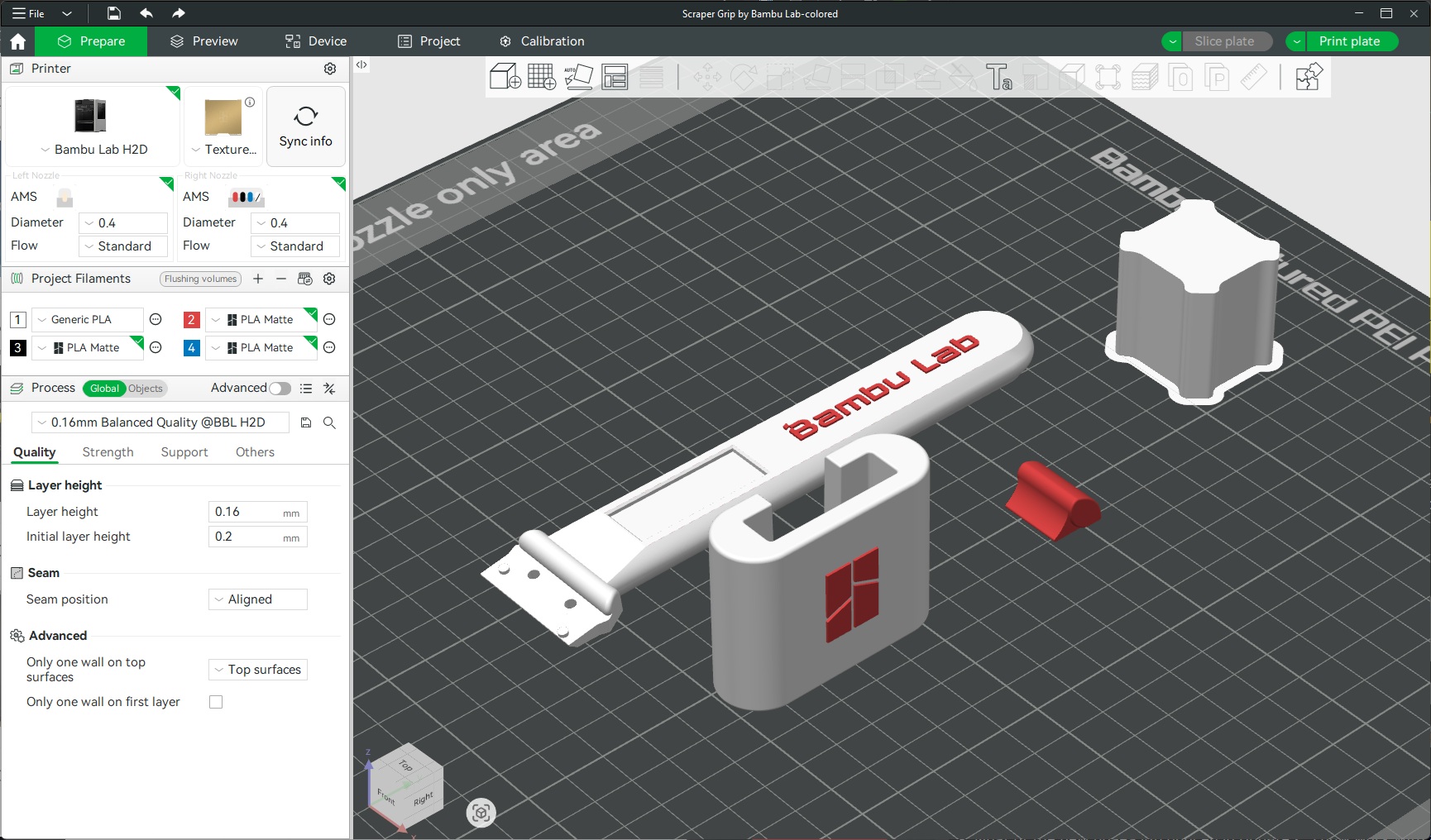
For this print, the dual nozzle nature of the H2D saved 182 colour changes and an estimated 101g of filament compared to a single nozzle printer.
Even with many colour prints, having two nozzles has its benefits
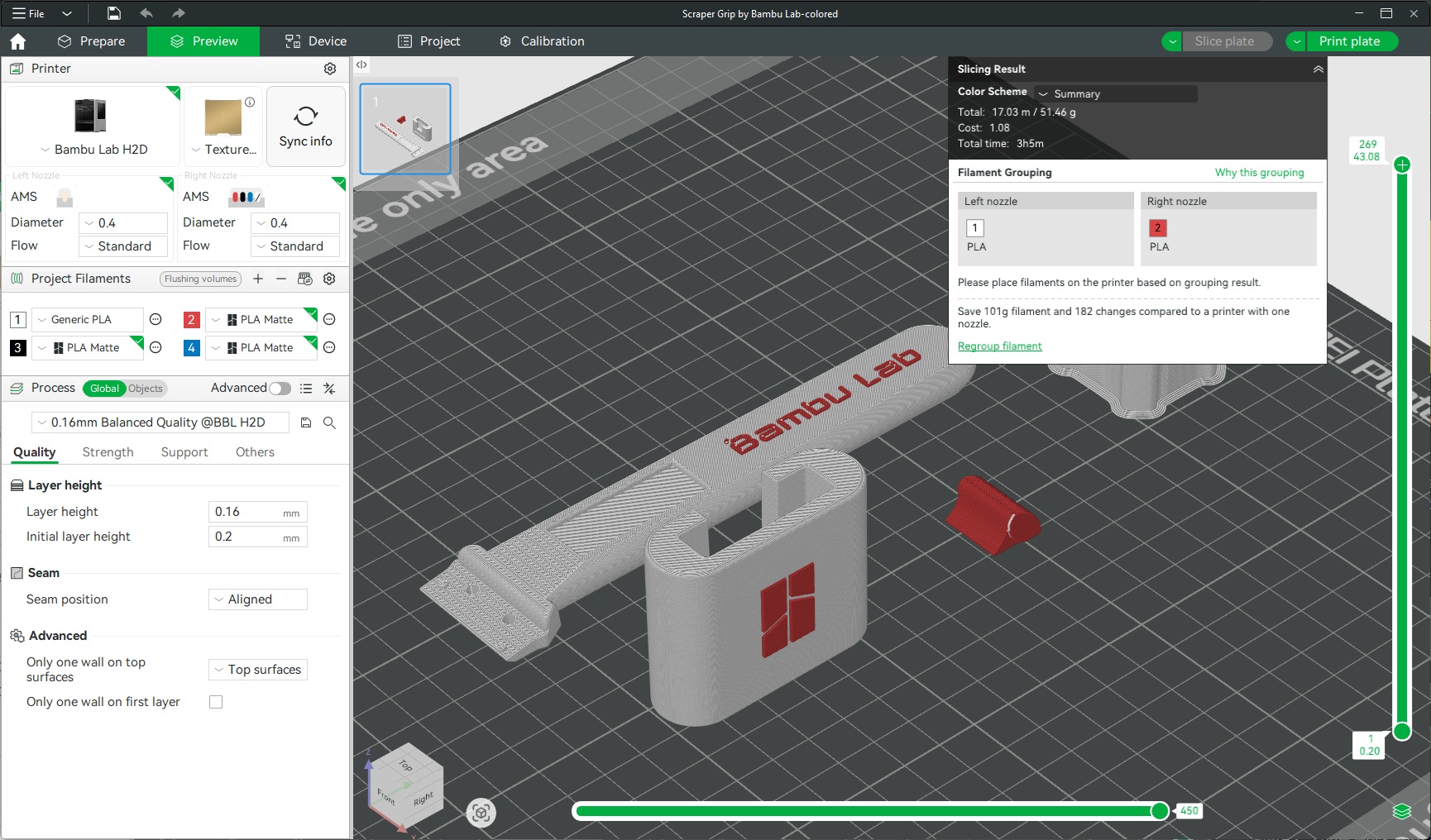
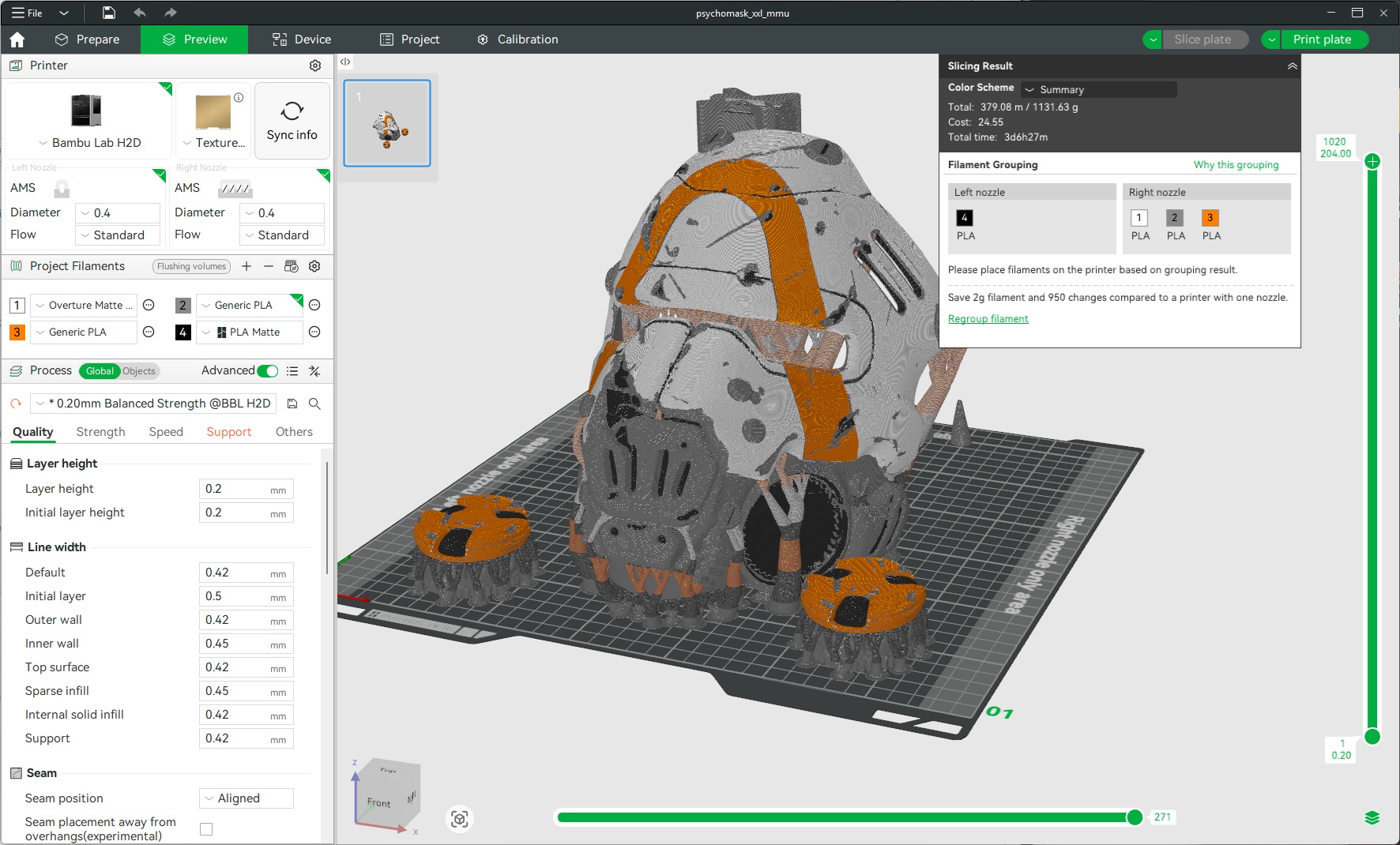
Below we have a four-colour Borderlands 4 mask print. It took a little over three days to print with the H2D. Using the two nozzles on the H2D saved us 950 filament changes. Sadly, Bambu Labs’ waste filament estimator was a little off here, saying that only 2g of filament would be saved. Almost 1,000 saved filament changes would save a lot more material than that.
Using the H2D made this print one day faster than using an H2S, the single-nozzle version of the Bambu Lab H2D. If you are into large multi-coloured 3D printing, the H2D’s extra nozzle has enormous benefits. This is especially true for prints that have one primary colour.
True Multi-Material 3D printing
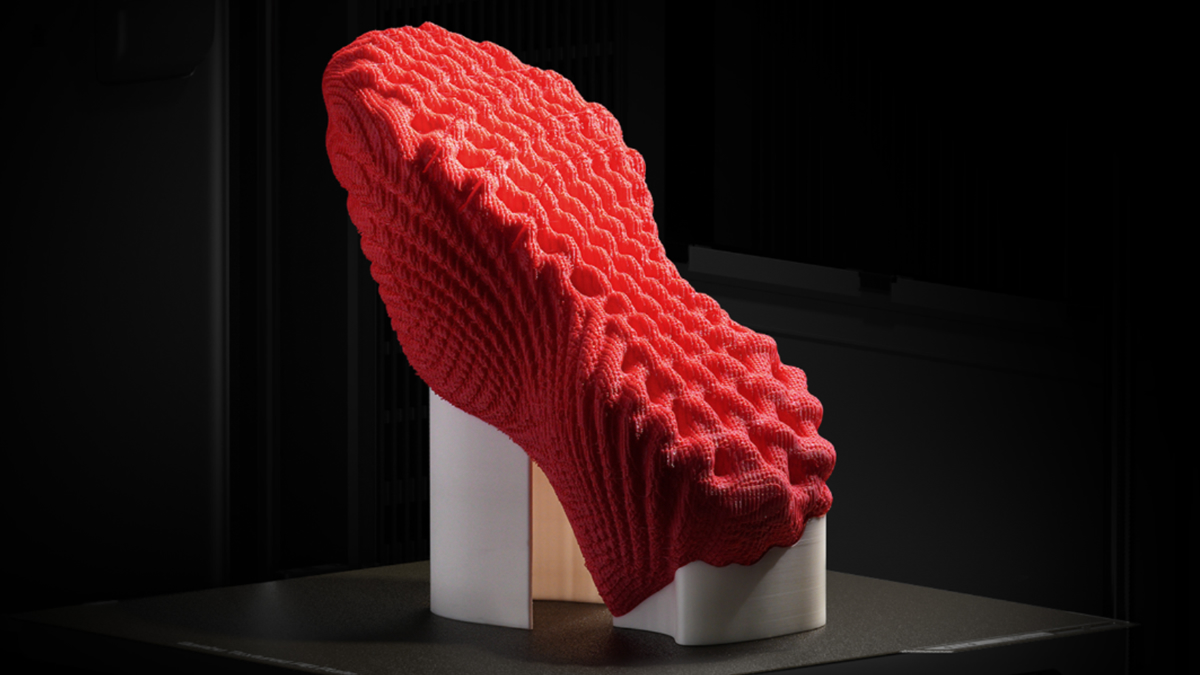
For materials like TPU, dual nozzle setups enable users to have PLA supports, enhancing the stability of large TPU prints while providing easier-to-remove supports. Switching between TPU and PLA is not a good idea for a single-nozzle 3D printer. For starters, most forms of TPU do not work well with an AMS. Secondly, material switching between TPU and PLA on a single nozzle is just begging for a nozzle clogging incident.
(Image from MakerWorld)
H2D Downsides
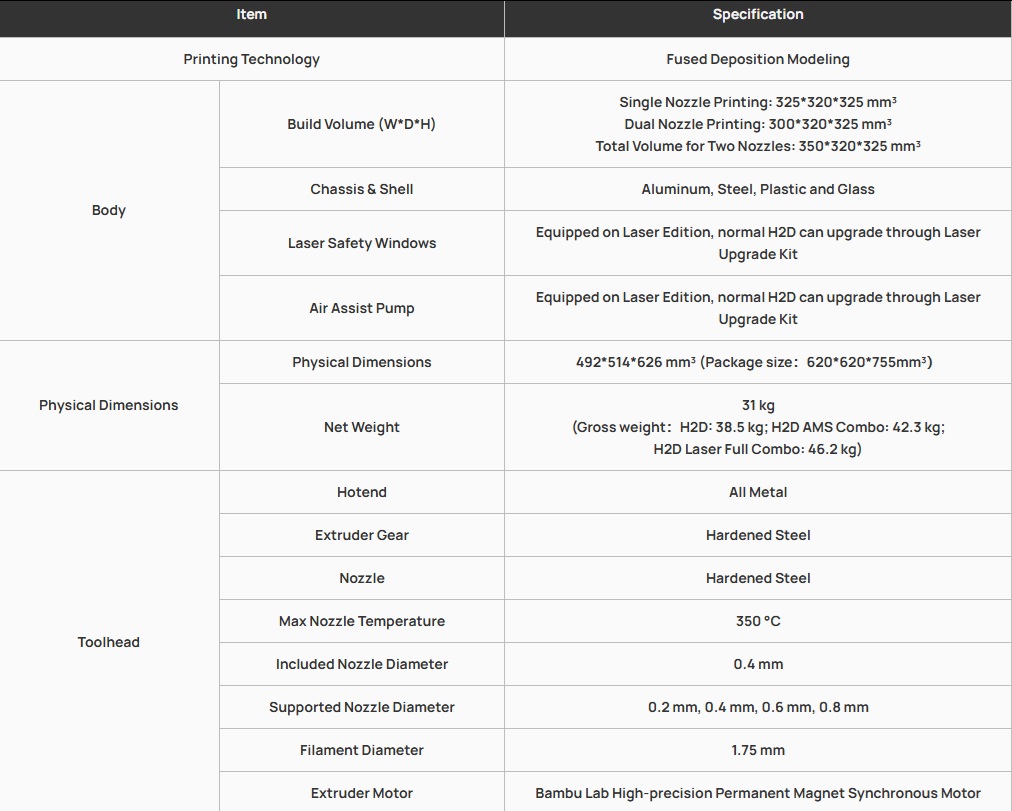
One problem that the H2D has is that its extra nozzles take up extra space. While the full build volume of the printer is 350x420x325mm, not all of that space can be used by a single nozzle. When both nozzles are being used, only 300x320x325mm can be used. With a single nozzle, 325x320x325 can be used.
Sadly, the H2D can’t make full use of its entire build volume. That said, it is rare for users to require the full bed size of this 3D printer.
If you consider the Bambu Lab H2S, it has a build volume of 340x320x340mm with its single nozzle. That’s notably larger than a single-nozzle build volume of the H2D. This is due to the smaller nozzle assembly of the H2S, which gives the nozzle more X and Y movement.
While build area concerns are not a huge issue, the added complexity will be a hurdle that newcomers need to overcome. With other Bambu Lab 3D printers, users can easily utilise the entire build area of their printers. With the H2D, there are limits.