


Assassin’s Creed Odyssey PC Performance Review


PC system requirements
It looks like we may have stumbled onto a red flag right out of the gate, with Ubisoft listing PC system requirements which all target 30FPS gameplay. While Ubisoft could just be aiming the same framerate targets as the game’s console versions, it could also be a sign that a constant 60 FPS experience may be as unreachable as it was in 2017’s Assassin’s Creed: Origins.
We can also see here that Ubisoft is targetting 1080p High and 4K High Settings with a GTX 970 and a GTX 1080 respectively, something which we will no doubt be looking into later.
Minimum Requirements
OS: Windows 7 SP1, Windows 8.1, Windows 10 (64-bit versions only)
Processor: AMD FX 6300 @ 3.8 GHz, Intel Core i5 2400 @ 3.1 GHz, Ryzen 3 – 1200
Video: AMD Radeon R9 285 (2GB VRAM with Shader Model 5.0) or NVIDIA GeForce GTX 660
Memory: 8GB RAM
Resolution: 720p
Targeted framerate: 30 FPS
Video Preset: Low
Storage: 46GB available hard drive space
DirectX: DirectX June 2010 Redistributable
Sound: DirectX 9.0c compatible sound card with latest drivers
Recommended Specification
OS: Windows 7 SP1, Windows 8.1, Windows 10 (64-bit versions only)
Processor: AMD FX-8350 @ 4.0 GHz, Intel Core i7-3770 @ 3.5 GHz, Ryzen 5 – 1400
Video: AMD Radeon R9 290X (4GB VRAM or more with Shader Model 5.0) or better or NVIDIA GeForce GTX 970 (4GB) – See supported list*
Memory: 8GB RAM
Resolution: 1080p
Targeted framerate: 30 FPS
Video Preset: High
Storage: 46GB available hard drive space
DirectX: DirectX June 2010 Redistributable
Sound: DirectX 9.0c compatible sound card with latest drivers
Recommended 4K Configuration
OS: Windows 10 (64-bit versions only)
Processor: AMD Ryzen 1700X @ 3.8 GHz, Intel Core i7 7700 @ 4.2 GHz
Video: AMD Vega 64, NVIDIA GeForce GTX 1080 (8GB VRAM with Shader Model 5.0)
Memory: 16GB RAM
Resolution: 4K
Targeted framerate: 30 FPS
Video Preset: High
Storage: 46GB available hard drive space
DirectX: DirectX June 2010 Redistributable
Sound: DirectX 9.0c compatible sound card with latest drivers
GPU Drivers
While testing Assassin’s Creed: Odyssey, we used AMD’s Radeon Software Adrenalin 18.9.3 driver and Nvidia’s Geforce 411.70 driver, both of which are advertised with game-specific optimisations for Ubisoft’s Greecian adventure.
Testing Methodology
OC3D is a website that is dedicated PC hardware, so you better believe that we test every game on a wide range of hardware configurations. This commitment to variety means that we will be using both Intel and AMD based testbeds as well as a range of GPU offerings from both Nvidia and Radeon.
Our primary test system uses Intel’s X99 platform, containing an Intel Core i7 6850K at a fixed clock speed of 4GHz. This testbed will use 32GB of Corsair Vengeance DDR4 memory and will be powered and cooled by an HX1200i PSU and an H110i AIO liquid cooler respectively, with everything sitting inside a Corsair 460X chassis. In this system, we are using an ASUS Strix X99 motherboard.
Game Test Rig
Intel i7 6850K @4.0 GHz
ASUS X99 Strix
Corsair Vengeance LP 4x8GB DDR4 3200MHz
Corsair HX1200i
Corsair H110i GT
Windows 10 x64 “Creators Update”
Secondary Ryzen Test System
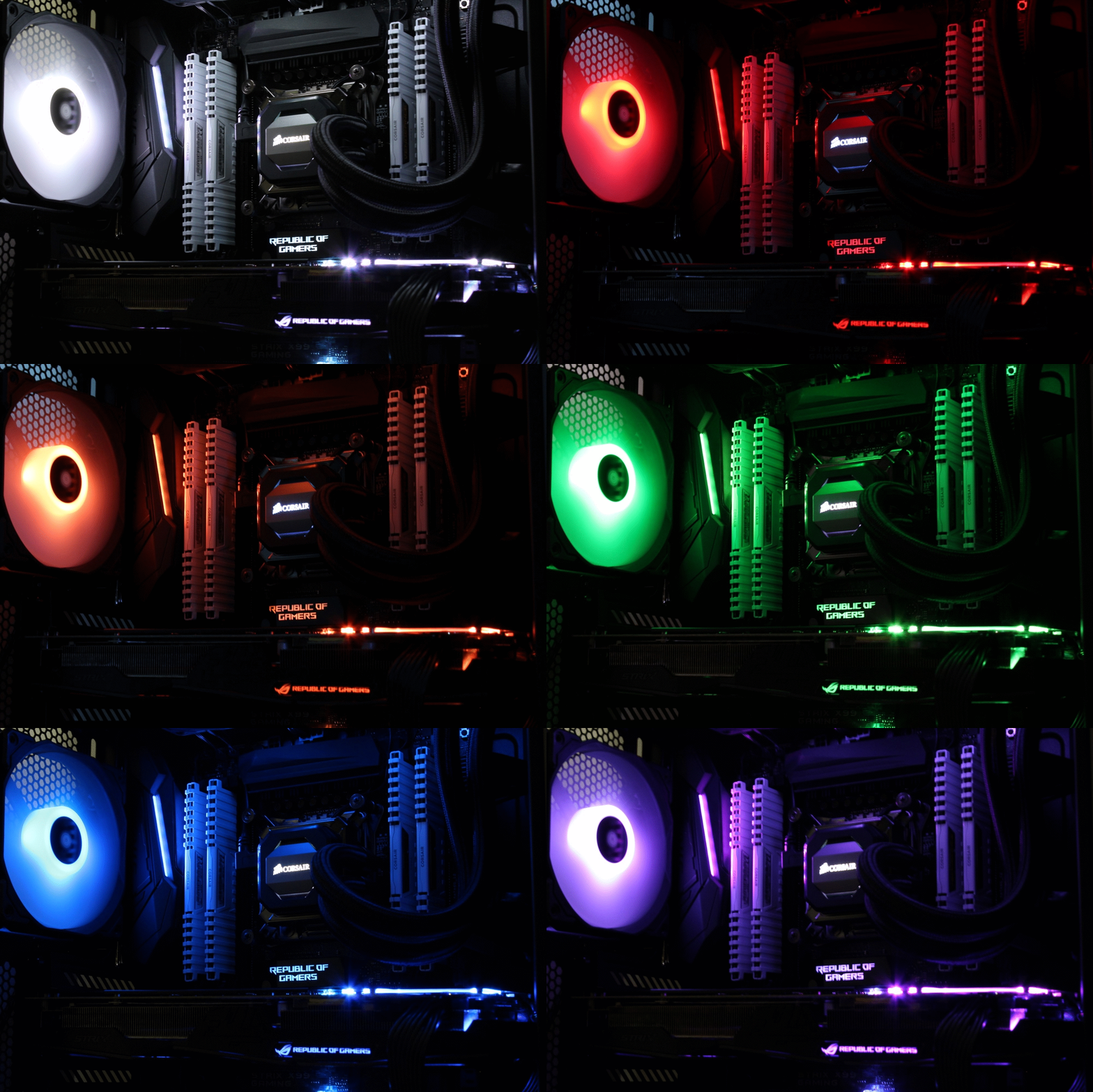
Aside from our standard X99 test system we also have a testbed based on AMD’s Ryzen 7 1700X CPU, which will sit at a clock speed of 4GHz be housed in an ASUS Crosshair VI Hero motherboard. This system will use Corsair’s 3200MHz Vengeance White LED memory and is contained inside another Corsair 460X chassis.
This extra system will allow us to see if any games offer a performance advantage to AMD’s Ryzen or Intel’s Core series processors.
AMD Ryzen Game Test Rig
AMD Ryzen 7 1700X @ 4.0GHz
ASUS X370 Crosshair VI Hero
Corsair Vengeance LED 2x8GB DDR4 3200MHz
Corsair 460X System Chassis
Corsair RMi650
Corsair H115i
Nvidia GTX 1080 Founders Edition
Windows 10 x64 “Creators Update”
GPU Selection
No gaming test suite would be complete without a selection of GPUs, which in this case covers Nvidia’s GTX 10-series and 9-series and AMD’s RX Vega, RX 400 and R9 300 series graphics cards. We have replaced our RX 480 GPU with its RX 580 equivalent, giving us a fairer comparison point between AMD/Nvidia’s modern graphics card lineups.
Geforce GTX 10-series
– Nvidia GTX 1080 Founders Edition
– Nvidia GTX 1070 Founders Edition
– ASUS GTX 1060 Strix Gaming OC
Geforce GTX 900-series
– ASUS GTX 960 Strix
AMD RX Vega Series
– AMD RX Vega 56
AMD RX 500 Series
– AMD RX 580 Strix OC
AMD GCN GPUs
– ASUS R9 380 Strix
Keyboard & Mouse
To control this setup, we will be using Corsair Strafe RGB keyboard with Cherry MX Silent keys alongside a Corsair M65 RGB mouse, matching the general theme of this RGB illuminated system.
Cherry MX Silent Keys are ideal for gaming, coming with similar characteristics as Cherry MX Red keys, but with quieter operation. This comparative silence will help keep players immersed in their games, without the distracting clicks that are present in other Cherry key switches.


